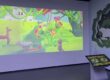

LiDAR-based interactive technology—often referred to as “LiDAR sensing interaction”—is an advanced human–computer interaction solution that uses LiDAR sensors (Light Detection and Ranging) to detect human position, movement, and gestures in real time. These spatial data are then converted into interactive responses such as visual effects, sound feedback, or lighting changes, creating immersive, touch-free experiences.
This technology is widely used in interactive projection systems, digital exhibitions, smart retail spaces, museums, and entertainment venues, where traditional touch screens are limited by size, durability, or environmental conditions.
How LiDAR Interactive Systems Work (Technical Principle)
From a professional engineering and system-integration perspective, LiDAR interaction follows a clear workflow:
1. Spatial Scanning
LiDAR sensors emit laser pulses and continuously scan a predefined area, accurately capturing distance, depth, and positional data of objects—most commonly the human body.
2. Data Processing & Coordinate Mapping
The reflected laser signals are processed by algorithms and converted into precise 2D or 3D coordinates, enabling real-time tracking of footsteps, hand gestures, and body movements.
3. Real-Time Interaction Feedback
These coordinates are bound to interactive content—such as games, animations, lighting logic, or sound triggers—so that where you walk, touch, or wave, the system responds instantly.
4. Multi-Platform Output
LiDAR interaction can be applied to:
- Wall projection systems
- Floor projection systems
- LED displays
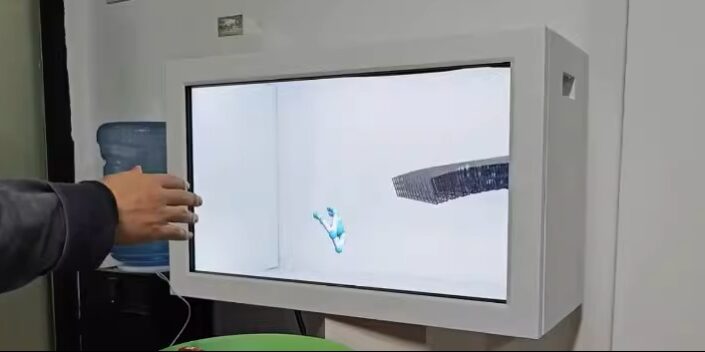
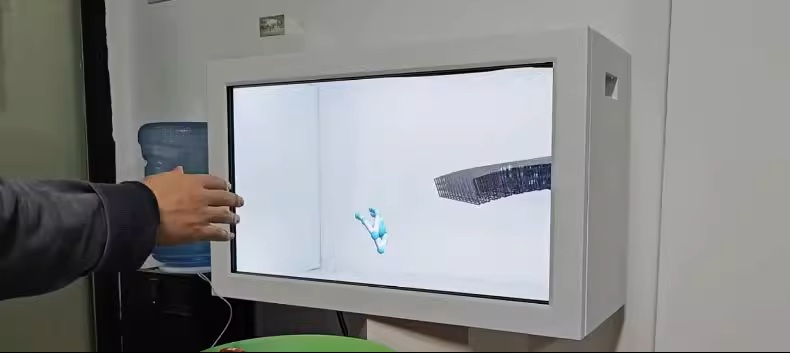
- Interactive shop windows and digital signage
Key Advantages of LiDAR Interaction Technology
1. Touch-Free & Multi-User Interaction
LiDAR interactive systems require no physical contact. Multiple users can interact simultaneously, making them ideal for public spaces, exhibitions, and high-traffic environments.
2. Large-Area Coverage
A single LiDAR sensor can cover several meters to over ten meters, supporting large-scale installations such as:
- Immersive halls
- Large LED walls
- Interactive floor projections
3. Strong Resistance to Ambient Light
Unlike camera-based or infrared systems, LiDAR interaction is highly resistant to ambient and strong lighting conditions, ensuring stable performance in bright indoor environments.
4. Hidden Installation & Clean Design
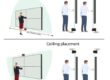
With compact hardware that can be mounted on ceilings or corners, LiDAR sensors remain virtually invisible, delivering a clean, futuristic interaction experience.
Common Application Scenarios
Commercial Spaces & Shopping Malls
- Interactive floor projections (water ripples, flowers, waves, brand logos)
- Motion-triggered advertising campaigns
- Brand engagement through immersive visual effects
Museums, Science Centers & Exhibitions
- Interactive knowledge walls
- Gesture-based educational content
- LiDAR-powered interactive games for all ages
Entertainment & Immersive Experiences
- Motion-sensing games (fruit slicing, whack-a-mole, rhythm and music games)
- Immersive themed environments
- Interactive sports and children’s play zones
LiDAR vs Traditional Interactive Technologies
| Technology | Touch Required | Multi-User Support | Light Sensitivity | Coverage Area |
|---|---|---|---|---|
| Capacitive Touch | Yes | Limited | Low | Small |
| Infrared Touch | No | Medium | High | Medium |
| Camera Vision | No | Medium | High | Medium |
| LiDAR Interaction | No | High | Very Low | Large |
LiDAR interaction stands out as the most accurate, stable, and scalable solution for professional interactive installations.
Why Choose a LiDAR-Based Solution from CPJ ROBOT?
With extensive experience in LiDAR sensing, robotics, and interactive systems, CPJ ROBOT provides:
- LiDAR sensors for interactive projection systems
- Reception and welcoming robots integrated with LiDAR interaction
- OEM / ODM customization services
- Free interactive software and calibration tools
- Scalable solutions for commercial, educational, and entertainment projects
CPJ ROBOT products are designed for industrial-grade reliability, long-term stability, and global deployment, earning trust from system integrators and solution providers worldwide.
Frequently Asked Questions (FAQ)
Q1: Is LiDAR-based interaction safe for humans?
Yes. Interactive LiDAR systems operate at low-power laser levels and comply with international eye-safety and electromagnetic standards.
Q2: Can LiDAR interactive systems support multiple users simultaneously?
Yes. LiDAR naturally supports multi-point tracking, allowing multiple people to interact at the same time without interference.
Q3: Can LiDAR interaction work in bright environments?
Absolutely. LiDAR performance is largely unaffected by ambient light, making it suitable for bright indoor and complex lighting conditions.
Q4: Can LiDAR interactive systems be customized?
Yes. Detection range, installation angle, software logic, interaction content, and system integration can all be customized through OEM/ODM services.
Q5: Can LiDAR be integrated with reception robots?
Yes. LiDAR sensors can be seamlessly integrated into reception and service robots, enabling gesture interaction, intelligent guidance, and smart space navigation.
Planning to build next-generation interactive projection systems or smart welcoming robot solutions?
CPJ ROBOT is a professional LiDAR interactive system and reception robot manufacturer, offering:
- OEM / ODM customization
- LiDAR-based interactive projection hardware
- Free interactive software
- Global agent and distributor recruitment
Contact CPJ ROBOT today to start your LiDAR interactive project or become a global partner.
You might be interested in:
- What Is LiDAR Interactive Projection? A Complete Guide to Its Applications in Modern Exhibition Halls
- What Is LiDAR Interactive Projection? A Complete Guide to Its Applications in Modern Exhibition Halls
- Advantages of Interactive Projection in Multimedia Digital Exhibition Halls
- Three Common Types of Interactive Wall Projection in Modern Exhibition Halls
- The Future of Dining — Inside the Interactive Projection Restaurant Revolution