

Why Lighting Can Still Matter for an “Active” Sensor
Single-channel LiDAR (single-line 2D scanning) is an active sensor: it emits laser pulses and measures the return signal. That makes it far less sensitive to everyday lighting changes than cameras.
However, in real deployments—especially outdoors—lighting and visibility still influence measurement quality. Not because LiDAR “needs light,” but because strong background radiation and atmospheric particles impact signal-to-noise ratio (SNR). When SNR drops, you typically see:
- reduced effective range (far targets disappear first)
- increased distance jitter (readings “float”)
- more spurious points (false returns) in challenging scenes
This article breaks down the lighting and environmental conditions that most often degrade accuracy, why they do it, and what you can do about it.
The Core Mechanism: SNR Drives Range and Precision
Think of LiDAR performance as a competition between:
- useful return signal (your laser echo)
- unwanted noise (sunlight, glare, and scattered returns from particles)
When noise rises or the useful echo becomes weaker, the sensor’s receiver has a harder time isolating the true return waveform. That results in less stable distance estimation and a shorter usable measurement envelope.
1) Direct Sunlight and High Background Radiation
When it happens
- outdoor midday
- clear sky, strong solar irradiance
- the sun is close to the LiDAR’s optical axis (near “looking into the sun”)
What you observe
- maximum range shrinks, especially for low-reflectivity targets (dark clothing, dark pavement)
- distance noise increases (more jitter on the same target)
- detection becomes inconsistent at the far edge of the rated range
Why it happens
Direct sunlight increases background photons entering the receiver, raising the noise floor. Weak returns at long distance can be “buried” by that background, even if the LiDAR is working correctly.
Practical takeaway
For outdoor 2D LiDAR projects, always treat “sun-aligned installations” as a risk. A LiDAR can be perfectly fine at dawn or dusk and behave noticeably worse at noon if the geometry is unfavorable.
2) Highly Reflective Surfaces and Glare (Specular Reflection)
When it happens
- glossy metal surfaces
- glass façades
- wet pavement after rain
- polished floors or high-gloss coatings (sometimes indoors)
What you observe
- occasional “spikes” or unstable points
- false points caused by multi-path reflections
- waveform saturation effects that reduce distance fitting accuracy
Why it happens
Reflective targets can return echoes that are too strong, saturating receiver stages or distorting the return waveform. In some geometries, the laser may reflect multiple times (mirror-like surfaces), creating ghost returns at incorrect distances.
Practical takeaway
If your interactive projection or people detection zone includes glossy surfaces, you’ll often get better stability by:
- using matte or textured finishes
- controlling angles to reduce mirror-like reflection paths
- applying software filtering to remove isolated outliers
3) Low Visibility Conditions: Fog, Heavy Rain, Snow, and Dust
This category is not “lighting” in the photographic sense, but it frequently coincides with low light and is usually grouped into “harsh environment” performance.
When it happens
- fog and mist
- heavy rain
- snow
- dust, sand, or high particulate environments
What you observe
- shorter usable range
- more noise points in front of the sensor
- reduced stability for distant targets and small objects
Why it happens
Airborne particles scatter and absorb laser energy. Some particles generate their own returns close to the sensor, increasing clutter and reducing the contrast between real targets and noise.
Practical takeaway
If your project must operate reliably in harsh weather, you should plan for:
- derating the effective range (don’t design at the edge of the datasheet)
- more robust filtering and tracking logic
- mechanical protection (housing, window maintenance, and condensation control)
4) What This Means for Real Deployments
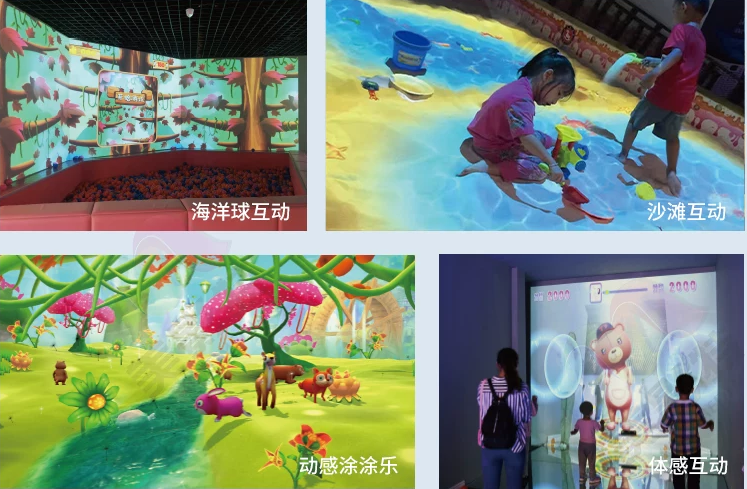
Indoor / controlled-light environments (interactive projection, access sensing)
Most indoor projects avoid the worst cases. As long as you:
- don’t point the LiDAR directly at intense light sources (stage lights, laser effects)
- avoid extreme glossy materials in the interaction zone
…single-channel LiDAR usually maintains stable, centimeter-level performance with comfortable margin.
Outdoor bright-light environments (parks, plazas, entrances)
Outdoor performance depends heavily on installation geometry and materials. The same sensor can behave very differently based on whether it is:
- aligned near the sun’s direction
- viewing wet or reflective pavement
- operating in heat haze or dust
5) Engineering Mitigations That Actually Work
A. Avoid “near-axis sun” mounting angles
If possible:
- tilt slightly downward for ground zones
- avoid orientations where the sensor stares toward the sun path at noon
- consider seasonal sun angles (summer vs winter)
B. Choose sensors designed for bright environments
Look for features in the spec sheet that indicate sunlight tolerance, such as:
- narrowband optical filtering
- appropriate operating wavelength strategy
- automatic gain control and robust receiver design
- stated performance under high illumination (some vendors specify conditions like very bright daylight)
C. Design the surface, not just the sensor
For interactive floors/walls:
- prioritize matte, high-contrast, non-glare surfaces
- avoid high-gloss coatings in the scanning zone
- manage wetness and drainage if outdoors
D. Build software to handle reality
Even the best hardware sees outliers sometimes. Practical pipelines include:
- outlier rejection (spike removal)
- clustering with minimum persistence rules
- track smoothing (to reduce jitter in touch points)
- zone logic that tolerates brief dropouts at range extremes
E. Leave range margin
A simple rule that saves projects: don’t design at the datasheet maximum. If you need reliable detection at 15 m in full sun, a 15 m “max range” claim is not a safe target. Build margin.
Field Checklist: If Accuracy Drops, Ask These Questions
- Is the sensor facing toward the sun path during peak hours?
- Are we scanning wet pavement, metal trims, or glass surfaces?
- Did weather introduce fog, heavy rain, or airborne dust?
- Are we operating at the far edge of the rated range?
- Is the protective window clean and free of condensation?
This checklist often finds the root cause faster than changing parameters blindly.
Conclusion
Single-channel LiDAR is fundamentally resilient to typical lighting variation because it is an active sensor. But when background radiation is extreme, reflective surfaces cause glare, or visibility is degraded by weather, the physics shows up as reduced SNR—leading to shorter effective range, higher jitter, and occasional false returns.
The good news is that these issues are predictable and manageable with the right combination of mounting strategy, surface design, sensor selection, and filtering logic.
Plan a Stable PoE LiDAR Deployment with CPJROBOT
If you are designing an interactive projection zone, people-counting entrance, or outdoor ground interaction experience and want stable performance across real lighting conditions, CPJROBOT can help.
CPJROBOT is a manufacturer of navigation robots and PoE LiDAR sensors, supporting practical deployments for:
- interactive floor/wall projection
- access control and passage sensing
- footfall counting and area awareness
- safety zone detection in indoor and outdoor environments
Share your site size, mounting height, and indoor/outdoor lighting conditions, and we can recommend a configuration approach (sensor placement logic, coverage planning, and integration method) that avoids common sunlight and glare pitfalls.
You may like: