
What Is Outdoor PoE LiDAR Interactive Floor Projection?
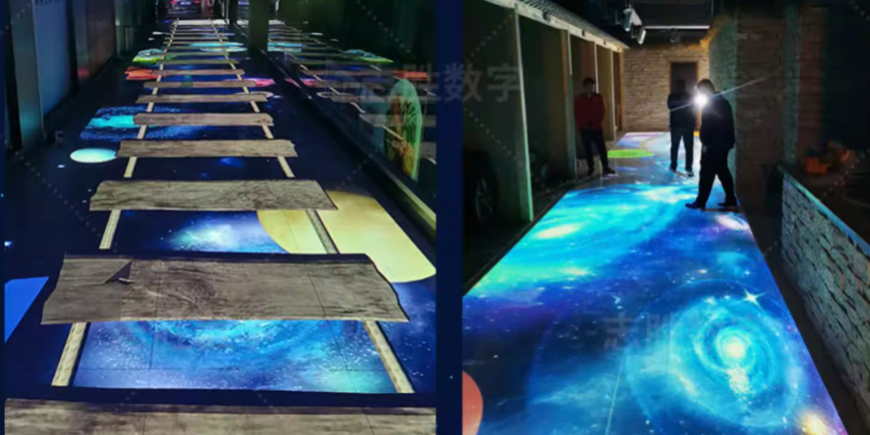
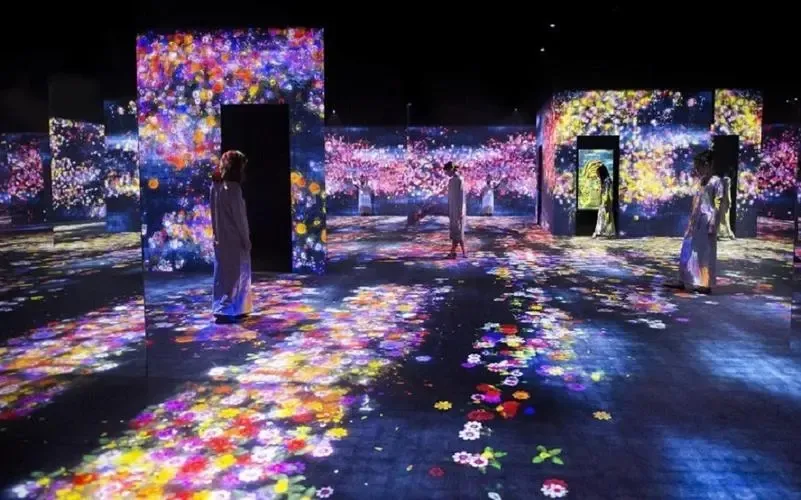
Outdoor interactive floor projection is a system that turns walkways, squares, and activity zones into a responsive “digital ground screen.” People don’t just watch visuals—they trigger them by stepping, running, and moving.
A practical outdoor setup usually includes:
- High-lumen projector (or LED ground display for extreme ambient light)
- PoE interactive LiDAR for real-time footstep/body tracking
- Outdoor protective structure (IP-rated enclosure, anti-theft, heat management)
- Control host (mini PC / industrial PC) running interactive content and effects
The result: a ground surface that reacts with ripples, light rings, particles, trails, and game mechanics—ideal for night-time activation, festivals, and brand experiences.

Most Popular Outdoor Play Modes and Use Cases
1) Interactive Walkway, Running Track, or Plaza Effects
This is the “always-on attraction” format.
What visitors see: water ripples, glowing circles, flowers blooming, stars, bubbles, footprints, light trails.
What triggers it: footsteps, presence zones, speed changes, group clustering.
Typical deployments:
- interactive running tracks in parks
- “light walkways” on commercial streets
- city landmark check-in points
- holiday or festival night-tour routes
This format is effective because it works for all ages without instruction. People understand it instantly: step → effect.
2) Outdoor Kids’ Interactive Game Zone (Digital Playground, Outdoor Edition)
Add a game library and you get repeatability.
Examples of proven themes:
- beach / ocean effects
- piano steps
- bubble popping
- dodge and collect
- catch falling objects
- simple sports mini-games
LiDAR detects children’s footwork and movement and the projected content responds immediately, creating a playful loop that keeps kids engaged while parents linger nearby.
Where it fits best:
- shopping mall entrances and outdoor plazas
- scenic areas with family foot traffic
- outdoor sections of parent-child entertainment venues
- resort and destination “family zones”
3) Linked Floor + Wall Interaction (Immersive Wrap-Around Scenes)
With multiple PoE LiDAR units, you can link a floor projection to a façade or feature wall.
Example interaction logic:
- a “splash” on the ground sends particles to the wall
- a light trail extends upward into the building surface
- a ground event unlocks wall animations or story chapters
This is how you move from a single interactive spot to a mini immersive environment—without building a full indoor dark room.
Why PoE LiDAR Works Well Outdoors
Outdoor interactive projection is difficult for traditional sensor stacks. PoE LiDAR brings practical advantages that align with outdoor constraints.
1) One Ethernet cable for power + data (PoE)
PoE simplifies installation because the LiDAR can be mounted on:
- light poles
- pergolas and corridor structures
- building eaves
- custom brackets
Instead of pulling separate AC power to every sensor point, you can centralize power and networking through a PoE switch in an equipment cabinet—often reducing civil work and speeding deployment.
2) Large-area coverage with multi-person tracking
Outdoor public spaces are rarely “one person at a time.” You need stable tracking with crowds, children running, and group behaviors.
Typical PoE interactive LiDAR deployments are designed for:
- wide coverage (plaza or track segments)
- many concurrent touch points / users
- consistent tracking for motion effects and games
This is crucial for commercial viability: interactive content must keep working when the space is busy.
3) Flexible for different ground shapes and layouts
Outdoor sites are rarely perfect rectangles. You may have:
- L-shaped paths
- curved routes
- multi-segment zones
- slight slopes or ramps
LiDAR-based interaction can be configured to match irregular zones, which helps designers create experiences that follow real pedestrian flow rather than forcing the site to fit the technology.
Outdoor Deployment: What Actually Determines Success
Brightness and visibility: choose display strategy by ambient light
Outdoor projection is fundamentally about contrast.
- Night-time / dusk: High-lumen projection performs best and looks dramatic.
- Daytime strong sunlight: Projection becomes challenging. Consider:
- very high brightness and a high-contrast surface
- shaded installation areas (canopies, corridors)
- or LED ground displays where budgets allow
A common baseline for outdoor projection is 7,000+ ANSI lumens, but the real requirement depends on:
- ambient light level
- projection size
- surface reflectivity
- desired visual style (subtle vs. bold)
Ground surface: don’t treat it as an afterthought
In outdoor interactive floors, the “screen” is the pavement.
Recommended surface characteristics:
- high contrast and consistent reflectivity
- anti-slip texture and verified traction
- durable and abrasion-resistant for heavy footfall
- easy to clean (dust and debris are constant outdoors)
Avoid:
- grass and uneven terrain (visual quality and tracking consistency drop)
- very rough, highly irregular ground that breaks the projection image
- glossy surfaces that cause glare and hotspots
Protection and security: IP rating is only the starting point
Outdoor systems require real-world protection beyond “waterproof.”
Typical requirements:
- IP-rated enclosures (often IP65 or above)
- anti-theft structure and locking mechanisms
- sun/heat management (ventilation design, thermal control)
- cable protection and strain relief
- safe mounting with load-rated brackets
Your projector and LiDAR are not “devices.” Outdoors, they are assets exposed to weather, tampering, and temperature swings. Treat them like infrastructure.
Safety: crowd behavior changes when the floor becomes a game
Once the ground reacts, people speed up.
Plan for:
- anti-slip materials and clean drainage strategy
- clear zone boundaries and visual cues
- safe run-out space (kids sprint unpredictably)
- content rules that reduce collisions (avoid forcing opposite-direction sprints in narrow paths)
A great interactive installation is not just beautiful—it is safe under peak traffic.
Scaling Up: From One Spot to a Full Interactive Route
Outdoor projects usually grow in phases.
Phase 1: Single “check-in point”
A compact interactive circle or rectangle near a landmark:
- easiest to install
- easy to evaluate engagement
- strong social sharing potential
Phase 2: Expanded multi-zone plaza
Add more sensors and projections to cover:
- multiple play islands
- separate kids zone + adult walkway effects
Phase 3: Linked route (night-tour activation)
Use networked zones along a path:
- sequential effects
- themed checkpoints
- festival storyline progression
Because PoE LiDAR and content platforms typically run over standard networking, scaling is often about coverage planning and content design, not reinventing the core system.
Integration and Content Control
A serious outdoor deployment should support flexible control and integration.
Look for support such as:
- multi-touch / touch emulation modes
- TUIO or UDP output for custom engines
- Unity-based or custom interactive software support
- remote content updates and configuration management
This matters when you want to:
- apply a city IP theme
- run brand campaigns
- create seasonal festival skins
- integrate scoreboards, event triggers, or interactive storytelling
In other words, the system should behave like a platform, not a single fixed demo.
Common Mistakes (and How to Avoid Them)
- Underestimating brightness needs
If the site is bright at night due to signage, you may still need higher lumens than expected. - Ignoring the pavement
A poor ground surface will kill contrast and make even the best content look dull. - No heat strategy for the projector enclosure
Heat buildup causes reliability problems faster than rain does in many climates. - Designing only for empty conditions
Test and tune for peak hours—crowds, kids, mixed movement patterns. - Running “one-size-fits-all” content
Outdoor spaces have unique flow. The best experiences match site geometry and visitor rhythm.
FAQ
Can outdoor interactive floor projection work during the day?
It can, but it depends on shade, brightness, surface contrast, and projection size. For full daylight use, LED ground displays or shaded corridors often deliver better results.
How big can one PoE LiDAR zone be?
It depends on sensor model, mounting position, and interaction precision requirements. Large plazas typically use multiple sensors with networked stitching for consistent coverage.
Is it only for kids?
No. Footstep-based ripple and trail effects are universal. Adding a game library makes it kid-friendly, but “night-tour walkway effects” often target general visitors and adults.
PoE LiDAR Interactive Projection for Kids’ Playgrounds
Multi-Point Tracking Fusion in LiDAR Table Interaction
PoE Power in LiDAR Deployments: Benefits, Limitations
Choosing a Short-Range LiDAR Sensor for Tabletop Interactive Projection