
PoE Single-Channel LiDAR in Plain Terms
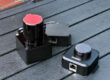
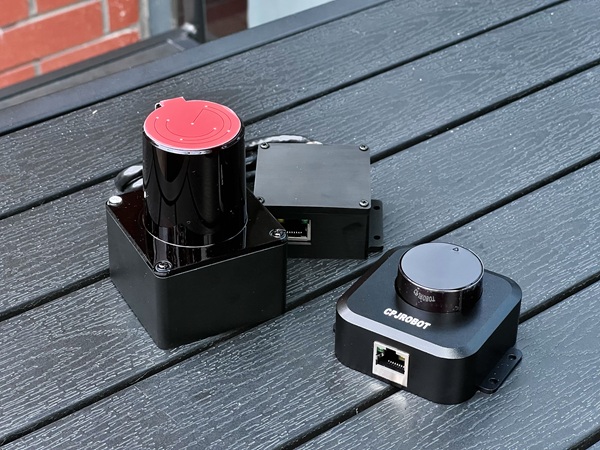
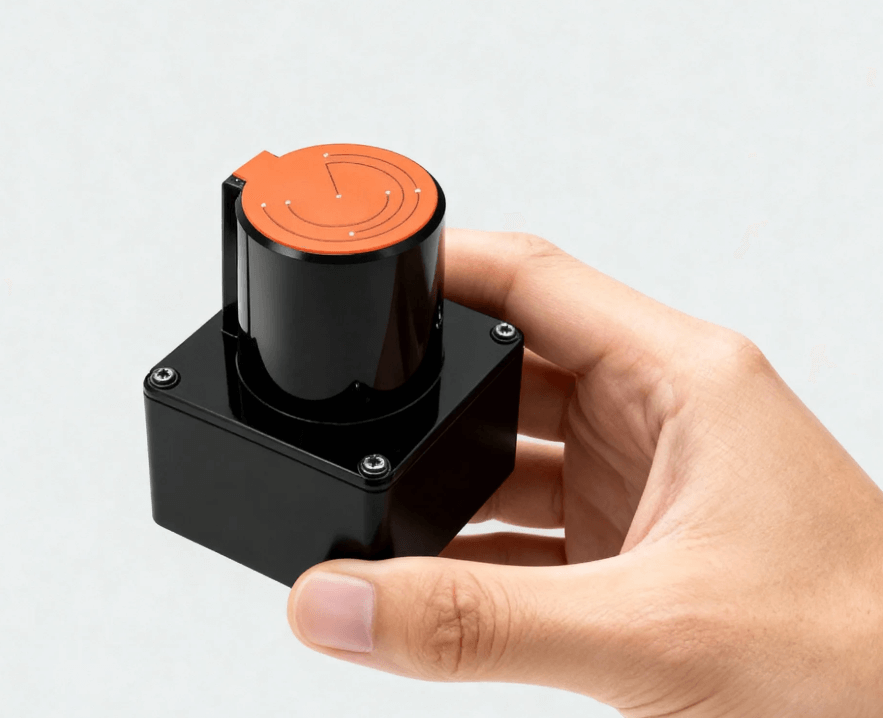
When people say “PoE single-channel LiDAR”, they typically mean a 2D, single-line (single-beam) scanning LiDAR that:
- is powered via PoE (Power over Ethernet)
- sends data over standard Ethernet
- measures distance in a single 2D plane (not a multi-beam 3D unit)
This sensor class is popular because it hits a practical sweet spot: simple wiring, stable data output, solid precision, and manageable cost—making it a go-to choice for interactive projection systems, entry sensing, and footfall analytics.
What “PoE” Actually Means (and Why It Matters)
PoE allows a single Ethernet cable to carry both power and data, typically using standardized PoE voltages in the 36–57 V DC range (depending on the PoE class/standard used).
In real projects, this translates into:
- easier ceiling/wall/pole installations (no local AC outlet required)
- cleaner retrofits after renovation
- centralized power management (via PoE switches, UPS, and structured cabling)
- faster multi-sensor rollouts in venues like malls, museums, and playgrounds
For systems integrators, PoE often reduces the hardest part of deployment: site power planning.
What “Single-Channel / Single-Line” Means in LiDAR Terms
“Single-channel” in this context usually refers to the optical scanning geometry:
- The LiDAR measures along one scanning plane—a single 2D “slice” of the world.
- A rotating or scanning mechanism sweeps that plane across a field of view (for example, ~280°), producing a 2D distance profile each scan.
Key distinction:
- 2D single-line LiDAR: one plane, great for detection/tracking on a defined surface (floor plane, wall plane, doorway plane).
- 3D multi-beam LiDAR: multiple vertical layers, richer environmental modeling, typically higher cost and more complex integration.
If your problem is “where are the feet/hands/people crossing a line,” a 2D plane is often exactly what you want.
Typical Specification Profile (What You’ll See on Datasheets)
Specs vary by model, but a typical PoE single-line time-of-flight (ToF) LiDAR may list:
- Range: ~0.1–15 m or ~0.1–25 m (often longer on high-reflectivity targets)
- Angular resolution: around 0.16° (varies by scan mode)
- Scan frequency: around 25 Hz (useful for real-time interaction and tracking)
- Ingress protection: IP67 (common for robust indoor/outdoor deployments)
- Power: low consumption, often around 1–3 W
- Interface: 100M Ethernet output (sometimes with additional protocol options)
From an application standpoint, the “big three” specs you should map to your use case are:
- Range vs. mounting height and coverage area
- Scan rate vs. motion speed (kids running, crowd flow)
- Angular resolution vs. required precision (touch/footstep accuracy)
Where PoE Single-Channel LiDAR Works Best
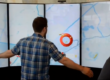
1) Interactive Projection (Floor / Wall / AR Sandbox)
This is one of the most common deployments.
How it works:
- The LiDAR is mounted overhead or at a boundary (ceiling, wall corner, truss)
- It scans a defined plane that intersects the interactive surface
- Hands, feet, toys, or bodies appear as moving points/contours in the 2D data
- Software converts those coordinates into touch points or interaction events
- The projector renders effects exactly where the interaction occurs
Why single-line 2D is a strong fit here:
- interaction happens on a surface that can be approximated as a plane
- multi-user tracking is straightforward
- the output can be mapped to standard protocols (e.g., touch emulation, TUIO, UDP)
Use cases:
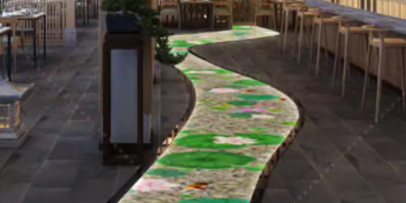
- interactive floor games for kids’ venues
- wall tapping/gesture zones in museums and retail
- AR sandbox terrain interaction with dynamic visuals
2) Access Control and Passageway Detection
Doorways and gates are “2D problems” more often than people think.
With a PoE single-line LiDAR positioned at the right height and angle, you can detect:
- entry/exit events
- direction of travel
- occupancy changes
- count of passing subjects (depending on configuration and density)
Why PoE helps:
- doorways are frequently the worst place to run local power
- PoE allows clean deployment from the nearest network point or PoE switch
Common integrations:
- RFID access control + LiDAR confirmation
- turnstile logic
- smart building occupancy and automation triggers
3) People Counting and Area Awareness (Footfall Analytics)
Shopping centers, exhibitions, and public venues often need:
- directional flow counts
- zone entry/exit counts
- basic trajectory tracking in 2D
A 2D LiDAR plane can provide reliable flow signals without needing camera imagery, which may be helpful for privacy-sensitive deployments.
Typical locations:
- mall entrances
- museum gallery transitions
- corridor bottlenecks
- event gates
4) Safety Zones and Intrusion Detection
For industrial or semi-industrial environments, a 2D scanning plane can define a virtual safety perimeter.
Examples:
- keep-out zone around a machine
- intrusion detection near equipment
- approach alarms for restricted areas
In many cases, you’re not trying to identify a person—just detect presence in a defined area quickly and consistently.
Key Benefits of PoE Single-Line 2D LiDAR
Simple deployment and scaling
One Ethernet cable per sensor supports:
- power delivery
- data uplink
- structured network management
This becomes a real advantage when you deploy many sensors across:
- multi-zone interactive installations
- large venues with multiple entrances
- modular expansions over time
Cost-effective compared to 3D multi-beam LiDAR
For surface interaction and passage detection, 3D can be overkill. Single-line 2D tends to offer a better cost/performance ratio for large-scale rollouts.
Precision that’s “good enough” for interaction
With centimeter-level repeatability and fine angular steps, many single-line units can support:
- footstep effects aligned to projected visuals
- multi-user interactive games
- stable people-counting logic in controlled geometries
Higher protection ratings for real venues
IP67-class hardware is suited for:
- outdoor edges of buildings
- theme parks and plazas
- entrances exposed to dust and humidity
- temporary event structures (with proper mounting and cable protection)
Practical Implementation Notes (What Integrators Care About)
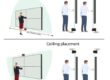
Mounting height and scan plane geometry
Your LiDAR measures a plane. The usefulness depends on:
- where that plane intersects the surface
- how wide the field of view spreads at the chosen distance
- whether occlusion (crowds) will hide targets behind others
For interactive projection, plan the zone so that:
- the scan plane cleanly covers the intended interaction surface
- the projector’s image and LiDAR coordinate system can be calibrated to match
Network design and PoE budgeting
If you scale to multiple sensors, ensure:
- PoE switch power budget is sufficient
- cable lengths and quality meet PoE requirements
- the control PC and switch sit behind UPS if uptime matters
Environmental considerations
Even with IP67, outdoor installs should address:
- direct sun heat load (enclosure thermal design)
- condensation control
- vibration (poles and trusses move)
- tamper resistance and cable protection
FAQ
Is “single-channel LiDAR” the same as “2D LiDAR”?
In most commercial discussions for PoE interactive sensors, “single-channel/single-line” usually refers to a 2D single-plane scanning LiDAR. Always confirm from the datasheet whether it is 2D single-plane or multi-layer.
Can a 2D single-line LiDAR handle multiple people at once?
Yes—within limits. It can track multiple targets in the same scan plane, but density, occlusion, and installation geometry affect accuracy.
Is it suitable for both indoor and outdoor projects?
Often yes, especially with IP67-class devices. Outdoor success also depends heavily on enclosure design, mounting stability, and cable protection.
You can may like: