
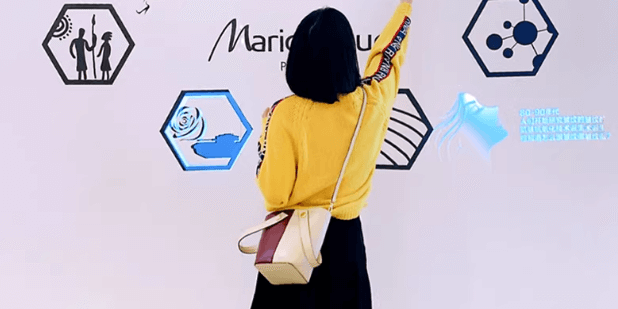
A PoE LiDAR Interactive Music Wall (also known as an interactive music wall or music pillar installation) transforms ordinary walls, columns, or light poles into playable musical interfaces.
By combining LiDAR motion sensing, projection mapping, and audio feedback, architectural surfaces become responsive instruments that users can play with their hands, gestures, or body movements—without physical contact.
This fusion of interactive media technology, sound design, and spatial experience is increasingly used in public spaces, cultural tourism, exhibitions, and education.
What Is LiDAR Interactive Music Wall?
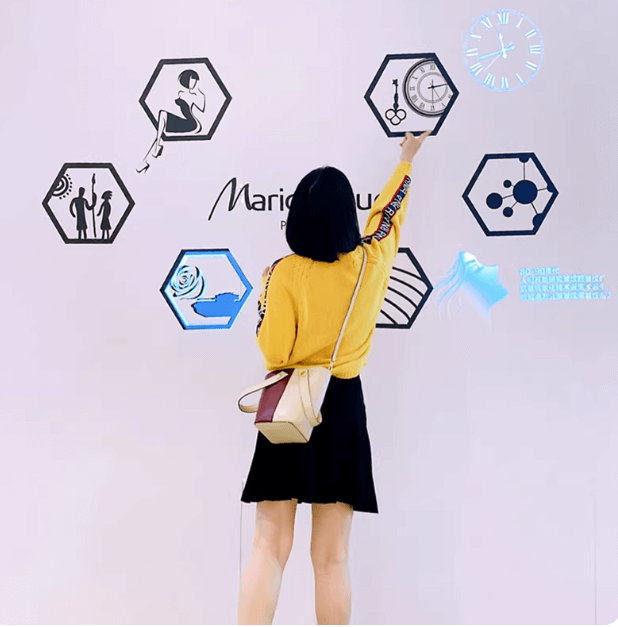
At its core, a radar or LiDAR interactive music wall uses non-contact sensing technology to detect human presence and gestures in front of a surface. When users touch, tap, or wave their hands in specific zones, the system triggers corresponding sounds and visual effects.
Typical installations project stylized musical elements—such as piano keys, drums, strings, or abstract sound zones—onto walls, columns, or decorative pillars.
Each interaction zone behaves like a virtual instrument key, allowing users to “play” music in real time.
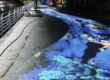
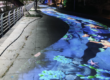
In outdoor projects—such as riverfronts, under-bridge spaces, or night tourism routes—infrared sensors combined with radar or LiDAR enable people to activate music and lighting effects simply by clapping, striking the wall, or moving their arms, creating immersive nighttime landmarks and social-media-friendly experiences.
System Architecture and Key Technologies
1. Sensing Layer: LiDAR, and Infrared Detection
The sensing layer is the foundation of the entire interactive music system.
- TOF LiDAR, or infrared-assisted sensing detects hand positions, movement trajectories, and body proximity.
- These technologies enable non-contact interaction, improving durability and hygiene in public installations.
- LiDAR-based interactive walls provide multi-touch, centimeter-level positioning accuracy, supporting:
- Multiple users playing simultaneously
- Sliding, sweeping, or curved gestures
- Fine-grained interaction mapping across large surfaces
This level of precision allows the wall to behave less like a simple trigger and more like a true digital instrument interface.
2. Projection and Visualization Layer
The visual layer translates interaction data into engaging, real-time feedback.
- High-lumen projectors or LED displays render musical graphics, waveforms, rhythm indicators, and animated effects on walls, floors, or columns.
- When an interaction occurs, the system responds with:
- Highlighted zones
- Ripple or particle animations
- Dynamic light trails synchronized with rhythm and tempo
This tight audiovisual coupling enhances immersion and encourages repeated engagement.
3. Sound Engine and Interaction Logic
Behind the scenes, a dedicated interaction engine connects sensing data with sound generation.
- Each detected action is mapped to:
- A specific instrument sound
- Pitch, volume, or rhythm parameters
- Visual feedback intensity and style
- Predefined musical scales, chord sets, or rhythmic patterns ensure that even untrained users can produce pleasant, harmonious results.
As a result, the installation works both as:
- A playful, intuitive musical toy for the public
- A controlled interactive performance tool for festivals, exhibitions, or brand activations
Application Scenarios
Interactive Music Walls for Urban Public Spaces and Night Tourism
In riverbanks, plazas, pedestrian streets, and waterfront promenades, interactive music walls enrich night-time environments.
Visitors can:
- Tap walls or wave hands to alter music and visuals
- Collaborate with strangers to create spontaneous performances
- Share visually striking, interactive moments on social platforms
These installations significantly enhance night economy value, dwell time, and urban identity.
Music Pillars in Commercial and Cultural Tourism Spaces
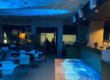
In shopping malls, cultural districts, theme parks, and tourist attractions, columns or light poles can be redesigned as interactive music pillars.
As visitors move around the structure:
- Different heights or zones trigger distinct instruments
- Sound layers and lighting effects evolve dynamically
- The space becomes an experiential landmark rather than static decoration
This approach combines entertainment, art, and spatial branding into a single installation.
Museums, Exhibitions, and Music-Themed Installations
In museums, galleries, or music festivals, LiDAR-based interaction enables innovative storytelling.
Examples include:
- Digitally recreating ancient murals or historical instruments
- Allowing visitors to “touch” projected instruments and hear authentic sounds
- Combining digital archaeology, sound design, and immersive interaction
This transforms passive viewing into participatory exploration.
Education and Children’s Interactive Music Experiences
For educational environments, interactive music walls offer a powerful learning tool.
- Simple icons, colors, and cartoon-style instruments guide children intuitively
- Rhythm, pitch, and musical structure are learned through movement and play
- Physical activity reinforces musical perception and coordination
This approach aligns well with STEAM education and experiential learning principles.
Why PoE LiDAR Makes a Difference
Using PoE (Power over Ethernet) LiDAR simplifies installation and system scalability:
- Single-cable power and data transmission
- Reduced wiring complexity for large walls or multiple pillars
- Stable performance for continuous public operation
For integrators and project owners, this translates into lower deployment costs, higher reliability, and easier maintenance.
Conclusion: Where Sound, Space, and Interaction Converge
A PoE LiDAR Interactive Music Wall is more than a digital installation—it is a new form of spatial instrument.
By merging precise sensing, immersive visuals, and responsive sound design, it turns architecture into an interface and visitors into performers.
From urban nightscapes and commercial landmarks to museums and education spaces, interactive music walls redefine how people experience sound, space, and technology together.