
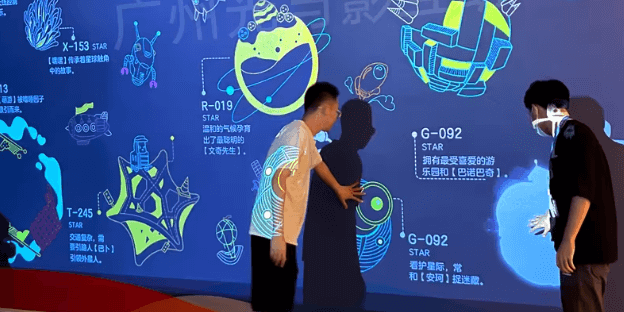
When designing an interactive music wall or interactive music pillar, the choice of LiDAR sensor is critical.
Unlike standard interactive projection, music interaction places higher demands on multi-touch performance, latency, accuracy, and environmental robustness. The system must respond smoothly to fast hand movements, support multiple users simultaneously, and remain stable under strong projection light or stage lighting.
Below are proven LiDAR sensor models and solution approaches suitable for LiDAR interactive projection music walls, along with practical selection guidelines.
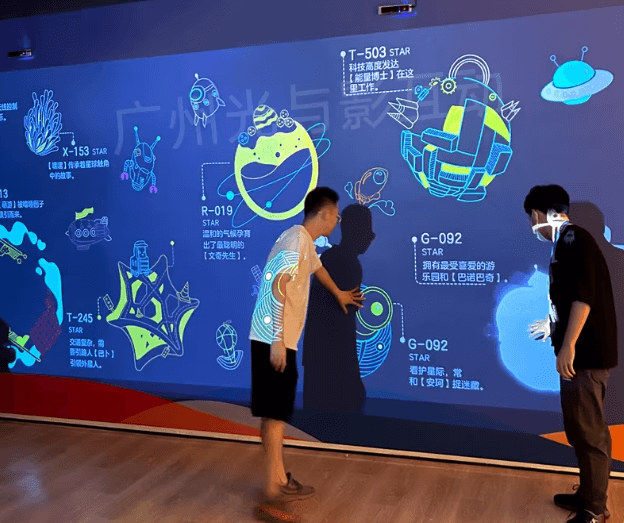
Key Selection Criteria for LiDAR-Based Music Interaction
Before choosing a specific model, ensure the LiDAR solution meets these core requirements:
- Multi-point touch capability for simultaneous users and complex gestures
- Sufficient coverage and installation distance for wall or pillar size
- Strong ambient light resistance, especially with projectors and stage lights
- Easy integration with interactive music software (Unity, audio engines, media servers)
Tier-One LiDAR Sensor Recommendations (Multi-Touch Priority)
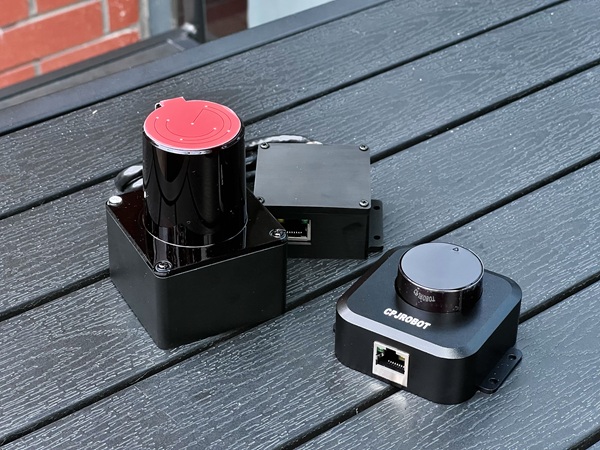
PoE Interactive LiDAR M1 / F1 Series (CPJ Robot)
Key Specifications (Typical):
- 2D TOF LiDAR with 360° scanning
- Effective interactive range: approx. 4–12 m (up to 12 m at 70% reflectivity)
- Multi-touch capability: up to 255 simultaneous touch points
- Typical interaction accuracy: < 3 cm (on a 4 m wide wall)
- Ambient light resistance: stable operation up to ~80 kLux
- Interface: PoE Ethernet (power + data via a single cable)
Why It Works for Interactive Music Walls
- High-density multi-touch performance makes it ideal for virtual piano keys, percussion grids, and multi-user music interaction
- TOF LiDAR technology provides reliable detection even in environments with strong projection light, decorative lighting, or stage effects
- Built-in LiDAR Touch software with multiple output protocols:
- Mouse emulation
- Windows Touch
- Multi-touch TUIO
- UDP
This allows direct integration with interactive music software, such as Unity-based systems, custom audio engines, or VJ / sequencer platforms.
Typical Application Scenarios
- Indoor or semi-outdoor interactive music walls
- Interactive music pillars in shopping malls and cultural tourism districts
- Children’s music walls and educational installations
- Large-area projection music walls requiring multi-user interaction
PoE Interactive LiDAR T1 (Industrial-Grade 270° TOF LiDAR)
Key Specifications:
- Industrial-grade 2D TOF LiDAR with 270° field of view
- Detection range: 0–25 m
- Configurable scan frequency: 10 / 15 / 20 / 25 / 30 Hz
- Measurement accuracy: ±2 cm (typical)
- Ethernet + PoE power supply
- Designed for continuous, long-term operation
Recommended Use Cases
- Large-scale interactive music façades
- Long corridors or multi-pillar music installations
- Outdoor or semi-outdoor music shows and light festivals
- Architectural projection mapping combined with music interaction
Why Choose T1
The T1 series is particularly suited for large spatial installations where interaction distance is long and reliability is critical. Its industrial design ensures stable performance in outdoor environments, extended operating hours, and demanding public projects.
Integrated LiDAR Touch Music Wall Solutions
Turnkey Interactive Music Wall Systems (e.g., KL Multimedia)
Some suppliers offer complete LiDAR-based interactive music wall solutions, combining:
- Proprietary LiDAR sensing modules
- Control units and calibration tools
- Pre-developed interactive music software and content
System Characteristics
- Sensor data is already mapped to musical notes, instruments, and visual effects
- Supports arbitrary projection sizes or LED walls
- Minimal need for custom point-cloud processing or interaction algorithm development
Best Fit For
- Content creators, exhibition designers, and experience operators
- Projects with tight timelines and limited in-house technical teams
- Music classrooms, children’s play areas, and commercial venues seeking fast deployment
Critical Performance Metrics to Evaluate
Multi-Touch Capacity and Responsiveness
For a smooth musical experience:
- Recommended minimum: 10+ simultaneous touch points
- Preferred frame rate: ≥10–20 FPS
- Low latency is essential for piano-style or percussion-based interaction
Coverage Area and Installation Geometry
- Sensor placement is typically top-mounted or angled downward
- Choose LiDAR field of view and range based on wall width and height
- For example:
- One M1/F1 unit can typically cover a 4–6 m wide wall
- Larger walls can be covered by multiple synchronized LiDAR units
Ambient Light Resistance
In environments with:
- High-lumen projectors
- Stage lighting
- Daylight or urban night lighting
TOF LiDAR sensors with high lux tolerance (up to ~80 kLux) are strongly recommended.
Software and Protocol Compatibility
Prioritize LiDAR sensors that support:
- Standard mouse or multi-touch output
- TUIO protocol
- UDP or SDK-based data streaming
This ensures compatibility with existing music engines, multimedia systems, and interactive software platforms.
Installation and Power Supply
Proper installation and power design are critical to ensuring accuracy, stability, and long-term reliability of a LiDAR-based interactive music wall. Compared with traditional contact sensors, LiDAR systems offer greater flexibility—but only when installed and powered correctly.
Recommended Installation Positions
For interactive music walls and music pillars, LiDAR sensors are typically installed in one of the following configurations:
- Top-mounted, downward-facing (most common)
Installed above the wall or pillar and angled downward to cover the full interaction surface. This provides the most uniform detection and minimizes occlusion between users. - Overhead ceiling-mounted
Suitable for wide music walls or multiple interactive zones, ensuring consistent multi-user detection across the entire area. - Angled front installation
Used when architectural constraints prevent overhead mounting. In this case, careful calibration is required to avoid shadow zones.
In all cases, the LiDAR field of view should fully cover the projected interaction area with a small margin to ensure accurate edge detection.
Installation Height and Coverage Planning
Installation height directly affects interaction accuracy and coverage:
- Typical mounting height: 2.5–6 m, depending on wall height and LiDAR model
- For a 4–6 m wide music wall, one PoE LiDAR M1/F1 unit is usually sufficient
- For larger walls or long corridors:
- Use multiple LiDAR units with overlapping coverage
- Synchronize interaction zones through software calibration
Correct height and angle planning ensures consistent touch detection, even during fast hand movements or group interaction.
Power Supply: Why PoE LiDAR Is Preferred
Power over Ethernet (PoE) is strongly recommended for interactive music wall projects.
Key advantages include:
- Single-cable solution
One Ethernet cable delivers both power and data, reducing wiring complexity. - Clean architectural integration
Ideal for ceiling mounts, decorative pillars, and outdoor structures where traditional power outlets are inconvenient or visually intrusive. - Improved system reliability
Centralized power management via PoE switches simplifies maintenance and reduces failure points. - Scalability
Multiple LiDAR sensors can be powered and managed from a single PoE switch, making large installations easier to expand.
For outdoor or semi-outdoor environments, industrial-grade PoE switches with surge protection are recommended.
You May Also Be Interested In: