


When you’re planning a LiDAR deployment — whether it’s a smart building, a perimeter security line, or a roadside sensing node — reliability and safety are not “nice-to-haves.” They are the difference between a system you can trust every day and a system that fails the moment conditions get difficult.
That’s why power architecture matters. In many fixed LiDAR installations, Power over Ethernet (PoE) has become the preferred approach because it turns LiDAR into a true network endpoint: one Ethernet cable carries both data and power. The result is faster deployment and cleaner infrastructure — with a few important constraints you must design around.
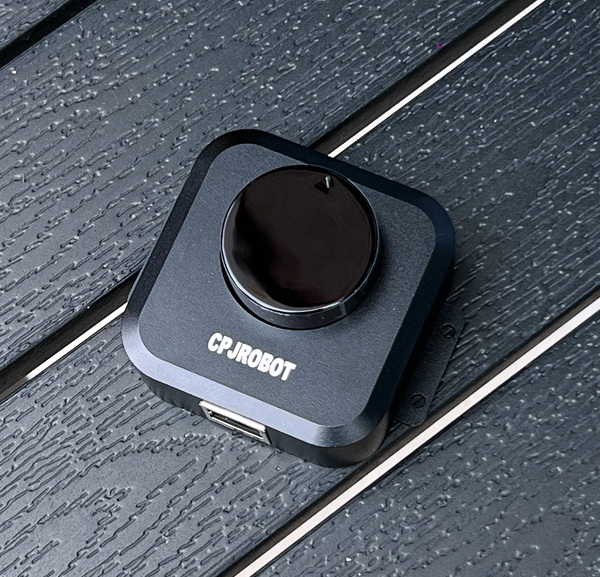
What Is PoE in a LiDAR Deployment?
PoE is a method of delivering low-voltage DC power to an IP device over standard Ethernet cabling while simultaneously transmitting data. In practical terms, your LiDAR connects to a PoE switch (or PoE injector) using a single cable, and that upstream device provides both network connectivity and electrical power.
Key Advantages of PoE for LiDAR
Simplified cabling and faster installation
With PoE, you eliminate the need to run a separate AC line and mount a local power adapter near the LiDAR. This is especially valuable for installations on poles, ceilings, building facades, corridors, and outdoor structures where adding AC power is time-consuming and costly.
Greater placement flexibility for better coverage
Because you’re not constrained by the nearest outlet, you can position LiDAR where it performs best — optimizing field of view, occlusion control, and coverage overlap. That directly improves results in smart-city sensing, traffic detection, and fixed security deployments.
Centralized power with easier management and backup
PoE allows multiple LiDAR units to be powered from a single network closet. You can centralize:
- power budgeting and monitoring,
- remote reboot / port power cycling,
- UPS backup to ride through outages.
This improves operational uptime and reduces site visits.
Improved safety and cleaner aesthetics
Ethernet is low-voltage cabling. In many environments, this reduces the need for exposed AC boxes at the device end, supports cleaner installations, and lowers risks tied to front-end AC wiring mistakes.
Limitations and Trade-Offs
Power ceiling
PoE standards have hard limits on available wattage. That means your total load must fit the budget:
- LiDAR sensor power
- heaters / defoggers for outdoor use
- protective enclosures
- edge computing modules (if integrated)
If the system power exceeds what your PoE class can deliver, you’ll need local power, a hybrid design, or a custom power strategy.
Distance and voltage drop considerations
Typical copper Ethernet runs target about 100 meters per segment. As distance increases — especially at higher power — voltage drop and heating become design constraints. Longer runs often require:
- intermediate switches,
- repeaters,
- fiber uplinks with local PoE conversion near the endpoint.
Cable quality (Cat5e vs Cat6, conductor gauge, termination quality) becomes a reliability factor, not a detail.
Higher requirements for network hardware and cabling discipline
PoE switches cost more than non-PoE switches, and you must plan a full power budget across ports. Poor grounding, surge exposure, or weak terminations can affect both power and data simultaneously, making faults more disruptive.
Concentrated failure domain
Centralizing power is efficient, but it can increase blast radius. A failed PoE switch, upstream PSU, or misconfigured power policy can take down multiple LiDARs at once unless you design for redundancy.
How to Decide: When PoE Is the Right Fit
PoE is typically the best option when:
- LiDAR is mounted outdoors / high-positioned and nearby AC is impractical
- device power stays within PoE / PoE+ / higher-power PoE budgets
- you want central UPS backup, remote management, and simplified maintenance
- LiDAR is part of an IP-based sensing network (smart city, security, traffic)
Separate (non-PoE) power is typically better when:
- the LiDAR solution includes heating, PTZ/actuation, or edge compute that pushes power high
- the site already has robust AC distribution and you prefer independent power/data paths
- you require strict power redundancy and isolation at the device level for industrial-grade uptime
Practical Summary
PoE makes LiDAR deployment feel more like installing an IP camera: cleaner cabling, faster builds, centralized control, and easier backup. For fixed, networked LiDAR nodes — especially in smart infrastructure and security — it is often the most efficient architecture.
However, once you move into high-power loads, long cable runs, harsh outdoor conditions, or high-redundancy industrial environments, PoE must be evaluated carefully and is frequently complemented (or replaced) by traditional power or hybrid designs.
You May Also Be Interested In:
Multi-Point Tracking Fusion in LiDAR Table Interaction