
How much does an interactive LiDAR sensor cost, and what should buyers consider before purchasing equipment for a museum, digital showroom, or interactive projection project?
For exhibition system integrators and equipment distributors, the purchase price of a LiDAR sensor is only one part of the total investment.
Projection equipment, software development, installation, calibration, and long-term maintenance can significantly influence the final project budget.
This guide explains how to evaluate interactive LiDAR sensor pricing, total system costs, manufacturer capabilities, and RFQ requirements before making a purchasing decision.
1. What Determines the Price of an Interactive LiDAR Sensor?
Interactive LiDAR sensors vary in price depending on their technical specifications and integration capabilities.
Detection Range and Scanning Coverage
Sensors designed for different installation distances and scanning areas may have different hardware requirements.
Buyers should consider:
- Required detection distance
- Scanning field of view
- Target size
- Measurement consistency
- Mounting geometry
- Effective interaction coverage
A sensor with a longer advertised range is not automatically the best choice for every interactive project.
Scan Rate and Processing Requirements
Scan rate affects how frequently a sensor updates its measurements.
However, interaction responsiveness also depends on data processing, communication, rendering, and display latency.
When comparing sensors, evaluate actual application performance rather than relying on FPS alone.
Connectivity and Installation
Network-based sensors with Power over Ethernet can simplify cabling.
For example, the CPJROBOT F1 PoE LiDAR supports IEEE 802.3af PoE connectivity.
Power and data can share one compatible Ethernet cable, reducing the need for separate local power wiring.
Software and Integration Support
Software compatibility can influence the overall project cost.
Before purchasing, confirm whether the supplier provides:
- Calibration software
- Communication documentation
- SDK resources
- TUIO support
- Unity or TouchDesigner integration options
- Technical assistance
A low hardware price may offer limited value if extensive custom software development is required.
2. What Is Included in an Interactive Projection System Budget?
An interactive projection installation normally includes several hardware and software components.
| Budget Category | Typical Components |
|---|---|
| LiDAR sensing | Sensors, mounting brackets, accessories |
| Projection | Projectors, lenses, mounting equipment |
| Computing | Computer, graphics hardware, storage |
| Networking | PoE switches, Ethernet cables |
| Software | Calibration tools, middleware, application licenses |
| Content | Games, animations, audio, custom development |
| Installation | Mounting, cabling, alignment, commissioning |
| Maintenance | Technical support, cleaning, replacement parts |
The total cost depends on the project scale and technical requirements.
A small interactive wall with one projector and a standard content package will have a different cost structure from a multi-projector immersive exhibition with custom software.
3. Interactive LiDAR Sensor Price vs. Total Project Cost
Buyers should distinguish between three quotation types.
Sensor-Only Quotation
This usually covers the LiDAR hardware and any specified accessories.
It may not include a projector, processing computer, custom application, or installation services.
Interactive Equipment Package
A package may include a LiDAR sensor, projector, computer, and selected software.
The buyer should verify exactly which components and licenses are included.
Complete Turnkey Installation
A turnkey project may cover equipment, content development, installation, calibration, testing, and handover.
This quotation will normally be higher because it includes more engineering and service work.
Do not compare a sensor-only quotation directly with a complete interactive projection package.
Published industry price guides also show substantial differences between equipment-only packages and fully installed systems. These figures are not interchangeable because the scope of supply varies.
For an accurate CPJROBOT quotation, buyers should submit their actual project requirements.
4. Hidden Costs in Interactive Projection Projects
Some expenses are overlooked during initial budgeting.
Custom Content Development
A standard interactive effect may require relatively little customization.
A branded museum experience with multiple scenes, educational content, and synchronized audio may require more extensive development.
Multi-Projector Alignment
Large installations may require multiple projectors, geometric correction, and edge blending.
These requirements increase equipment and commissioning complexity.
Calibration and Site Testing
Sensor mounting and coordinate mapping must be tested under actual operating conditions.
Unusual surfaces, visitor occlusion, and complex installation geometry may require additional engineering time.
Software Licensing
Some interactive platforms charge license fees or require paid upgrades.
Confirm whether the proposed software includes ongoing charges, activation limits, or restrictions on commercial deployment.
Maintenance and Downtime
A low-cost system may become expensive if it requires frequent recalibration or replacement.
Consider maintenance access, spare parts, technical support, and recovery procedures.
5. How to Compare Interactive LiDAR Manufacturers
When selecting an interactive LiDAR supplier, evaluate more than the quoted unit price.
Manufacturing and Product Capability
Confirm that the supplier can provide appropriate technical specifications, product documentation, and consistent hardware configurations.
Application Compatibility
Ask whether the sensor has been tested with the intended interactive software.
For customized projects, request relevant integration documentation.
Calibration Support
Reliable coordinate mapping is essential for interactive projection.
Verify that the supplier provides suitable calibration tools or technical guidance.
Quality and Reliability
Request information about relevant testing, product protection ratings, and operating conditions.
Do not assume that a lower-cost sensor is unreliable or that a higher-priced sensor is automatically superior.
Evaluate products using the same measurable performance requirements.
OEM and ODM Support
Distributors and system integrators may require customized hardware configurations, accessories, documentation, or integration assistance.
Confirm the available customization scope, minimum order quantity, development costs, and lead times directly with the manufacturer.
6. Why Consider CPJROBOT as an Interactive LiDAR Manufacturer?
CPJROBOT specializes in the development and manufacturing of interactive LiDAR sensing products.
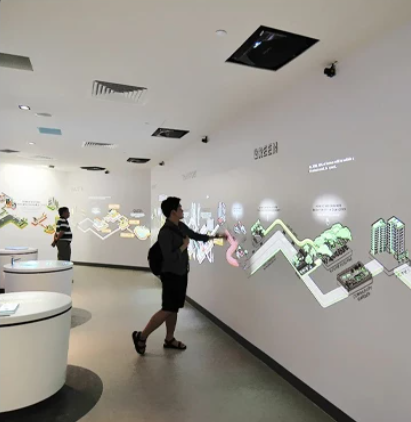
Its PoE LiDAR solutions are designed for applications such as:
- Interactive magic walls
- Interactive floor projection
- Science museums
- Corporate showrooms
- Children’s entertainment centers
- Immersive digital exhibitions
CPJROBOT F1 PoE LiDAR
The F1 offers:
- 270° scanning field of view
- Up to 30 FPS scanning
- IEEE 802.3af PoE connectivity
- Ethernet data communication
- IP65 protection rating
- Multi-point interaction support
- Compatible multi-LiDAR integration
- Supported Unity, TouchDesigner, TUIO and SDK interfaces
These features can help integrators develop flexible interactive installations.
The most appropriate model should be selected according to the required sensing geometry, software, and application performance.
7. Interactive LiDAR RFQ Checklist for Buyers
A complete Request for Quotation helps manufacturers recommend suitable equipment.
Include the following information.
| RFQ Parameter | Information to Provide |
|---|---|
| Application | Interactive wall, floor, LED display, immersive room |
| Installation size | Width, height, and active area |
| Sensor mounting | Available positions and restrictions |
| Interaction type | Touch-like input, footsteps, object detection |
| User capacity | Expected simultaneous interactions |
| Environment | Indoor/outdoor, lighting, dust, humidity |
| Software | Unity, TouchDesigner, custom application |
| Connectivity | Ethernet, PoE and network requirements |
| Order quantity | Prototype, sample, or batch procurement |
| Customization | OEM/ODM requirements |
| Delivery | Destination and project schedule |
Example RFQ
“We are developing an interactive wall for a science museum. The projected area is 8 meters wide and 3 meters high. We require multi-user touch interaction, Unity integration, and Ethernet connectivity. Please recommend a suitable PoE LiDAR configuration and provide hardware pricing, calibration software information, lead time, and technical documentation.”
Providing this level of detail makes the quotation more useful than requesting a generic sensor price.
8. How to Reduce Interactive Projection Project Costs
Choose the Correct Sensor Configuration
Avoid purchasing unnecessary sensing capacity.
At the same time, do not reduce the number of sensors below what the coverage plan requires.
Reuse Compatible Content
Standard interactive effects may reduce custom development work.
For branded exhibitions, evaluate whether existing content can be adapted instead of rebuilt.
Plan Cabling Early
PoE-compatible equipment can simplify installation when the network infrastructure is designed correctly.
Test Before Large-Scale Deployment
For multi-site or large exhibition projects, validate a representative configuration before ordering all equipment.
This helps identify integration problems before they become expensive.
Evaluate Long-Term Support
A supplier that provides documentation, calibration resources, and technical assistance may help reduce future integration and maintenance expenses.
9. Frequently Asked Questions
How much does an interactive LiDAR sensor cost?
Pricing depends on model specifications, quantity, accessories, and customization requirements. Contact the manufacturer for a current quotation based on your application.
Is a PoE LiDAR sensor more cost-effective than a traditional sensor?
PoE can reduce separate power-cabling requirements, but total cost depends on the equipment, installation, software, and maintenance needs.
Can I buy interactive LiDAR sensors directly from a manufacturer?
Yes. CPJROBOT manufactures interactive LiDAR products and can be contacted for product selection and purchasing enquiries.
Does the sensor price include interactive games?
Not necessarily. Hardware, calibration software, game content, and custom development may be quoted separately. Confirm the scope of supply.
What information should I provide for an OEM/ODM enquiry?
Provide the application, technical requirements, target quantity, customization needs, and expected delivery schedule.
Can I test one sensor before placing a bulk order?
Ask the supplier about sample availability, compatible software resources, and evaluation procedures before purchasing.
Conclusion
Interactive LiDAR procurement should focus on total project value rather than hardware price alone.
Sensor specifications, software compatibility, calibration, installation requirements, and long-term support all affect the final cost.
For exhibition system integrators and equipment distributors, working directly with a manufacturer can simplify technical communication and equipment selection.
Request an Interactive LiDAR Quotation from CPJROBOT
Looking for a reliable PoE LiDAR manufacturer for your interactive projection project?
CPJROBOT provides interactive LiDAR sensing hardware and integration resources for museums, commercial exhibitions, interactive walls, and immersive spaces.
Contact us for product specifications, project configuration advice, and purchasing information.
Email: [email protected]
Website: https://www.poelidar.com/