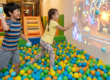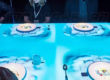

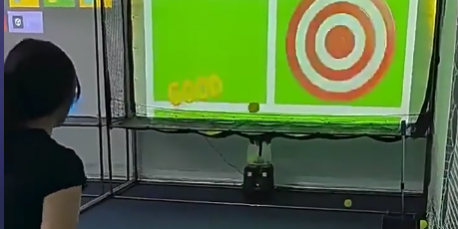
Imagine stepping onto a floor that turns into a virtual football field, kicking toward a projected goal, or competing with friends in a fast-paced interactive sports challenge. Every movement triggers visual effects, sounds, or scoring feedback, turning an ordinary indoor space into an engaging digital playground.
This is the concept behind immersive sports games.
As entertainment venues look for new ways to combine physical activity with digital experiences, LiDAR interactive projection offers flexible opportunities for children’s playgrounds, schools, family entertainment centers, and commercial sports venues.
Instead of relying entirely on traditional sports equipment, operators can create interactive walls and floors that respond to players’ movements, steps, touches, and other configured actions.
With CPJROBOT PoE LiDAR interactive sensors, project developers and system integrators can build responsive sports entertainment environments using projection technology, real-time sensing, and customizable game content.
But what kinds of immersive sports games can you actually create? And how can you select the right interactive experience for your venue?
This guide explores practical game ideas, commercial applications, and important design considerations.
1. What Are Immersive Sports Games?
Immersive sports games combine physical movement, digital graphics, interactive sensing, and game-based feedback to create an engaging entertainment experience.
Unlike conventional video games, which typically require handheld controllers, immersive sports experiences allow participants to interact through physical actions.
Depending on the installation, players may:
- Step on projected targets.
- Touch or tap interactive walls.
- Move between virtual activity zones.
- Participate in digital football challenges.
- Compete against other players in timed games.
- Trigger animations through body movement or physical contact.
The system detects these actions and translates them into digital events within the game.
For example, stepping into a highlighted floor zone might score a point, while touching a projected target on a wall might activate a new challenge.
How Does LiDAR Interactive Projection Work?
A typical LiDAR-based interactive sports system includes four main components:
1. PoE LiDAR Sensor
The LiDAR sensor detects objects, positions, or interactions within a configured scanning area.
2. Projection System
A projector displays sports-themed graphics, moving targets, scoreboards, and animations on walls or floors.
3. Interactive Software
Software processes LiDAR data and converts valid detections into game commands.
4. Game Content
The game engine controls scoring, animations, sound effects, multiplayer challenges, and other interactive elements.
The basic interaction process is:
Player Movement → LiDAR Detection → Software Processing → Visual and Audio Feedback
For venue operators, this creates an opportunity to develop digital sports attractions without requiring every game to have dedicated physical equipment.
However, the available interaction types depend on the sensor arrangement, scanning plane, and game software. A standard 2D LiDAR installation does not automatically recognize every full-body movement or high-speed sports object.
2. Interactive Sports Walls and Floors: Two Ways to Create Engaging Experiences
One of the biggest advantages of interactive projection is its flexibility.
Different surfaces can support different types of sports-themed entertainment, allowing operators to adapt activities to the available space.
2.1 Interactive Sports Walls: Hit, Touch, and Score
An interactive sports wall transforms a flat vertical surface into a digital playing area.
Projected graphics respond when players touch or trigger designated areas of the wall.
Popular game concepts include:
Virtual Target Challenge
Players try to activate targets appearing at different locations on the wall. Each successful interaction earns points.
Interactive Goalkeeper Game
A virtual goal and moving targets appear on the wall. Players compete to activate designated scoring zones.
Wall Reaction Challenge
Colorful targets appear in changing sequences. Players must touch the correct target before the timer expires.
Team Score Battle
Two teams compete by activating targets assigned to their team colors. A digital scoreboard displays the results.
For venues already equipped with a suitable projection wall, these concepts can provide new content without major changes to the physical layout.
Where it works best:
- Children’s indoor playgrounds
- Family entertainment centers
- Shopping mall activity zones
- Digital sports arcades
- Interactive exhibition spaces
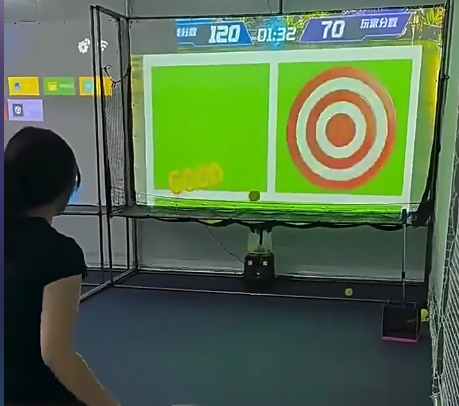
For physical ball-throwing games, sensor placement and detection feasibility must be validated separately. Ball impacts are not identical to hand-touch interactions, especially when objects move quickly.
2.2 Interactive Sports Floors: Step Into the Game
Interactive floor projection transforms ordinary floor areas into movement-responsive digital environments.
Instead of interacting with a vertical display, players use their feet and body position to activate projected content.
Consider a floor that displays a grid of colored sports targets.
When players step into the correct zones, the targets disappear, new patterns appear, and the scoreboard updates.
This interaction model can support a variety of entertainment formats.
Digital Hopscotch
Traditional hopscotch becomes a colorful projected game with changing patterns and difficulty levels.
Step-on-Target Challenge
Players move between illuminated floor targets to collect points within a time limit.
Virtual Football Field
A football-themed environment displays goals, scoring zones, and animated football effects. Players activate zones through detected steps or movement.
Interactive Obstacle Adventure
Players navigate a projected route while avoiding virtual obstacles and collecting digital rewards.
Floor interaction is particularly suitable for activities that use walking, stepping, or directional movement.
Unlike hardware-intensive amusement equipment, projected game content can be changed through software, provided the underlying sensing and display setup supports the new activity.
2.3 Combining Interactive Walls and Floors
For larger immersive sports venues, wall and floor interaction can be combined into a unified experience.
Imagine a digital sports arena where players first step onto illuminated floor zones and then activate corresponding targets on a large projected wall.
The game can move through several stages:
- Step onto the starting zone.
- Follow projected floor instructions.
- Move toward the next activity area.
- Activate a target on the interactive wall.
- View the score and proceed to the next round.
This format is useful for designing sports-themed adventure games, team challenges, and multi-stage competitions.
For larger spaces, multiple CPJROBOT PoE LiDAR sensors can be arranged to provide coverage for different interaction zones.
3. Five Immersive Sports Game Ideas for Interactive Entertainment Venues
For operators considering an interactive sports installation, the most important question is often:
What games can we offer in our available space?
Here are five practical concepts that can be developed with suitable interactive projection technology.
Game 1: Interactive Football Shooting Challenge
Football is a familiar activity that can be adapted into a digital entertainment experience.
A projector displays a virtual football goal with animated targets and scoring zones.
Depending on the interaction hardware, players can activate projected targets using wall contact, detected movements, or a separately validated ball-impact system.
Possible gameplay features:
- Moving scoring targets
- Timed football challenges
- Different difficulty levels
- Team scoring competitions
- Animated goal celebrations
Ideal applications: Family entertainment centers, football-themed playgrounds, shopping malls, and sports entertainment venues.
Design tip: Keep scoring rules simple so first-time visitors can understand the game quickly.
For actual football kicking and ball-flight tracking, additional sensing or specialized hardware may be necessary. LiDAR projection should not be assumed to provide complete football trajectory tracking without testing.
Game 2: Interactive Agility and Reaction Games
Interactive projection can create entertaining activities based on responding to changing visual instructions.
For example, colored targets appear at different positions on a projected floor.
Players move toward the highlighted zones before the countdown finishes.
After each successful interaction, the next target appears.
Possible game modes include:
- Color matching challenges
- Direction-following games
- Timed stepping sequences
- Random target activation
- Team relay challenges
The purpose is to create enjoyable movement-based activities rather than claim scientifically verified improvements in athletic performance.
Ideal applications: Schools, children’s activity centers, family sports venues, and digital playgrounds.
Design tip: Provide adjustable game speeds and difficulty settings so participants with different abilities can enjoy the activity.
Game 3: Multiplayer Sports Competition
Multiplayer interaction can turn an individual activity into a social entertainment experience.
Instead of one player competing against a screen, multiple participants share the same game environment.
For example, two teams could compete on a large interactive floor divided into different colored zones.
Each team earns points by activating its assigned targets.
Possible features include:
- Team-based scoring
- Countdown timers
- Competitive rounds
- Animated scoreboards
- Cooperative challenges
- Group celebration effects
The number of supported players depends on the game logic, interaction space, sensor coverage, and the ability of the software to distinguish simultaneous inputs.
Ideal applications: Commercial sports entertainment spaces, indoor playgrounds, company team-building activities, and family entertainment centers.
Design tip: Alternate competitive and cooperative modes to accommodate visitors who prefer different styles of play.
Game 4: Interactive Running and Movement Adventure
An ordinary open floor can become an imaginative movement-based adventure.
Players follow projected routes, collect virtual objects, and activate targets while moving between designated areas.
Themes can include:
Space Mission: Navigate a projected space route and activate mission checkpoints.
Ocean Adventure: Move across an underwater scene and collect virtual treasures.
Jungle Challenge: Follow a trail while avoiding projected obstacles.
Sports Festival: Complete a series of themed movement challenges.
These games are particularly suitable for younger audiences because visual storytelling provides an accessible way to introduce physical participation.
Ideal applications: Children’s playgrounds, early learning centers, science museums, and immersive entertainment halls.
Design tip: Build short game rounds with clear instructions and immediate feedback to keep participants oriented.
Game 5: Interactive Sports Tournament Arena
For venues with more floor space, several interactive sports games can be organized into a multi-stage experience.
For example, participants rotate through three activities:
Stage 1 — Reaction Zone
Step on illuminated floor targets within a countdown.
Stage 2 — Interactive Target Wall
Activate projected wall targets to collect points.
Stage 3 — Team Competition
Join other participants in a cooperative or competitive scoring challenge.
The final screen displays scores, team results, or completion awards.
This concept can be adapted for birthday parties, themed events, recreational competitions, and commercial entertainment programs.
Ideal applications: Digital sports centers, large family entertainment venues, shopping mall attractions, and interactive event spaces.
Design tip: Keep individual stages short and allow visitors to enter or leave between rounds without disrupting the entire game.
4. Immersive Sports Games for Different Commercial Applications
Not every venue needs the same interactive sports experience.
A successful project begins with understanding the target audience, available space, and intended visitor activities.
4.1 Children’s Indoor Playgrounds
Traditional indoor playgrounds often rely on slides, ball pits, climbing structures, and other physical equipment.
Interactive sports projection offers an additional way to introduce digital activities without necessarily replacing existing equipment.
For example, an unused wall can become an interactive target game, while a suitable open floor can support projected stepping challenges.
Recommended content:
- Colorful target games
- Digital hopscotch
- Interactive football-themed activities
- Cooperative movement adventures
- Animated sports challenges
Value for operators:
- Introduces new interactive attractions.
- Supports software-based content updates.
- Creates activities suitable for individual or group participation.
- Offers flexible themes for events and seasonal programs.
For existing playground retrofits, CPJROBOT PoE LiDAR can be considered as part of the sensing system for suitable wall and floor interaction projects.
4.2 Schools and Educational Activity Centers
Schools can use movement-based projection games to create interactive recreational and educational experiences.
For example, teachers may design activities where students step on projected numbers, follow directional instructions, or work together to complete a digital challenge.
Recommended content:
- Movement-based number games
- Team coordination activities
- Color recognition challenges
- Interactive sports-themed quizzes
- Cooperative floor games
The goal should be to make participation enjoyable and accessible.
These activities should not be presented as substitutes for qualified physical education instruction, athletic assessment, or evidence-based training programs.
4.3 Commercial Digital Sports Centers
Commercial sports entertainment venues may require more competitive content and greater flexibility for group participation.
Interactive projection allows operators to combine familiar sports themes with digital scoring and visually engaging game environments.
Recommended content:
- Virtual football challenges
- Timed reaction games
- Team competition zones
- Multi-stage sports adventures
- Sports-themed arcade games
For larger installations, multiple LiDAR sensors may be used to monitor separate interaction regions.
Game content can also be updated to introduce different themes, challenges, or event formats without necessarily rebuilding the entire venue.
4.4 Shopping Malls and Family Entertainment Centers
Shopping malls often need attractions that are easy to understand and visually engaging.
An interactive sports wall can serve as a compact entertainment feature in a designated activity zone.
A larger installation may combine floor projection, wall interaction, scoring displays, and themed animations.
Recommended content:
- Short football-themed challenges
- Family team competitions
- Interactive target games
- Seasonal sports activities
- Branded entertainment experiences
For temporary promotions, the system can be adapted to the event’s visual identity, provided the necessary content integration has been developed.
4.5 Museums and Interactive Exhibition Spaces
Immersive sports games are not limited to commercial playgrounds.
Museums and science centers can use interactive projection to introduce movement-based demonstrations and participatory exhibits.
For example, an exhibit might explore how scoring rules work in different sports, or invite visitors to activate projected objects through movement.
Recommended content:
- Interactive sports discovery games
- Team-based educational challenges
- Movement-responsive visual demonstrations
- Sports history-themed interactive exhibits
- Collaborative target games
These experiences can combine entertainment with educational storytelling while remaining accessible to visitors with different levels of experience.
5. How CPJROBOT PoE LiDAR Supports Immersive Sports Games
Creating interactive sports entertainment requires a sensing system that can detect relevant physical actions and communicate them to the game software.
CPJROBOT specializes in PoE LiDAR interactive projection solutions for walls, floors, and other digital environments.
Its sensing products can support different interactive applications when paired with compatible projection equipment and software.
5.1 Contact-Free Sensing Without Wearable Controllers
LiDAR sensing can detect interactions within a defined scanning area without requiring participants to hold a controller or wear a tracking device.
For suitable applications, this makes participation more intuitive.
Visitors can approach the interactive area and begin following the game’s visual instructions.
5.2 PoE Technology Simplifies Installation
CPJROBOT F1 PoE LiDAR uses a single Ethernet connection for power and data communication.
This can simplify installation in venues where sensor placement must accommodate projectors, wall structures, and existing equipment.
Reduced wiring complexity is particularly helpful for playground upgrades and commercial interactive installations.
5.3 Wide-Angle Detection for Interactive Spaces
The CPJROBOT F1 PoE LiDAR offers a 270° scanning field of view and supports scanning rates of up to 30 FPS.
These characteristics make it a candidate for interactive projection projects requiring wide-area sensing.
However, actual coverage and detection performance depend on sensor placement, surface characteristics, interaction type, and calibration.
Project developers should evaluate the required sensing geometry before deciding how many sensors to install.
5.4 Multi-LiDAR Expansion for Larger Projects
Large sports entertainment venues may include several walls, floors, or connected activity zones.
CPJROBOT supports multi-LiDAR integration for projects requiring coverage beyond a single sensor’s practical field of view.
With appropriate software configuration, multiple interaction zones can form part of a coordinated digital experience.
This can be useful for:
- Large interactive sports floors
- Extended target walls
- Multi-stage sports games
- L-shaped interactive environments
- Immersive entertainment rooms
5.5 Free LiDAR Touch Software and SDK Integration
CPJROBOT provides LiDAR Touch software and development resources for supported interactive LiDAR products.
The software helps integrators configure interaction areas and map sensing information to digital content.
For customized projects, compatible SDK and protocol interfaces can support integration with platforms such as Unity or TouchDesigner.
This allows developers to create original sports games, interactive scoring systems, and themed animations.
Important: LiDAR Touch and the SDK provide sensing and integration capabilities. Complete sports games, specialized gameplay mechanics, and commercial content packages may require additional development or licensing.
6. How to Balance Entertainment, Physical Activity, and Participant Safety
Immersive sports games should be engaging, but responsible project design must also consider physical movement and participant safety.
This is especially important in children’s playgrounds and crowded entertainment venues.
6.1 Match Gameplay to the Target Audience
Different age groups have different preferences and physical capabilities.
For younger children, consider simple activities with large targets, clear instructions, and slower visual transitions.
For older participants, more complex scoring systems and competitive challenges may be appropriate.
However, game difficulty should remain adjustable.
6.2 Design Activities with Different Movement Levels
Not every immersive sports game needs to involve fast running, jumping, or intense physical activity.
A well-designed venue can offer activities with different movement demands.
| Activity Level | Example Games | Suitable Experience |
|---|---|---|
| Low | Target touching, color matching | Casual participation and younger players |
| Moderate | Stepping games, movement adventures | General recreational play |
| More active | Timed movement challenges, team competitions | Supervised energetic entertainment |
These categories describe relative gameplay demands, not scientifically measured exercise intensity.
The actual physical effort depends on the game rules, session duration, and participant characteristics.
6.3 Prioritize Safe Movement and Clear Boundaries
Before launching an interactive sports installation, consider:
- Non-slip flooring appropriate for the activity
- Adequate distance between participants
- Clear entrances and exits
- Safe projector and sensor mounting
- Physical protection against ball impacts
- Suitable game boundaries
- Accessible instructions and supervision
- Regular equipment inspection
Avoid encouraging uncontrolled running, collisions, or jumps in spaces that were not designed for those activities.
Projected graphics should also remain visible without creating confusing floor patterns or hiding changes in floor level.
6.4 Create Short, Repeatable Game Sessions
Short game sessions can be easier to manage in commercial entertainment environments.
For example, an operator might offer:
- A quick introductory challenge
- A timed individual round
- A multiplayer team round
- A final scoring or celebration screen
Session durations should be selected based on venue capacity, audience preferences, and activity demands.
Operators can test different formats to identify which arrangements work best for their customers.
6.5 Avoid Unverified Athletic Performance Claims
Interactive sports games can encourage recreational movement and participation.
However, entertainment-oriented projection systems should not automatically be described as professional athletic training equipment.
Claims about improving reaction speed, cardiovascular fitness, coordination, or sports performance require appropriate evidence.
For commercial promotional materials, focus on the actual experience offered: movement-based entertainment, interactive scoring, flexible game content, and group participation.
7. Planning an Immersive Sports Space: What Should Venue Owners Consider?
Before purchasing equipment, operators should define what they want visitors to experience.
A few practical questions can help guide the project.
What Is the Available Space?
Measure the width, length, and height of the intended interaction area.
A compact venue may be better suited to one interactive sports wall or floor game.
Larger spaces can accommodate multiple activity zones, provided suitable safety clearances and sensor coverage are available.
Who Will Use the Games?
Identify the main audience:
- Preschool children
- School-age children
- Families
- Teenagers
- Adult recreational participants
- Mixed-age visitor groups
This affects game complexity, visual content, session rules, and accessibility requirements.
Which Interaction Type Is Most Appropriate?
Choose the interaction model that best matches your venue.
Wall interaction: Suitable for target-based activities, tapping games, and digital scoring challenges.
Floor interaction: Suitable for stepping games, movement adventures, and zone-based competitions.
Combined interaction: Suitable for larger immersive installations with multiple activity stages.
Will You Need Customized Games?
Some projects may use compatible existing interactive content.
Others may require custom sports themes, scoring rules, event branding, or integrated displays.
CPJROBOT’s LiDAR sensing technology and SDK resources can form part of a customized solution developed by an interactive software team or system integrator.
How Will the Venue Operate the System?
Consider the practical requirements of daily operation:
- Game selection and resetting
- Staff supervision
- Calibration checks
- Equipment cleaning
- Content updates
- Multiplayer session management
- Projector and computer maintenance
Reliable daily operation is just as important as the initial visual experience.
8. Frequently Asked Questions About Immersive Sports Games
What are immersive sports games?
Immersive sports games are interactive entertainment experiences that combine physical actions with digital graphics, sensing technology, and game-based feedback. Players interact through stepping, touching, movement, or other configured actions.
Can interactive projection turn a normal room into a sports game area?
Yes. A suitable indoor space can be equipped with projection, sensing hardware, a control computer, and compatible game content. The feasibility depends on the available area, lighting, installation surfaces, safety requirements, and interaction design.
What sports games can be created with LiDAR interactive projection?
Possible concepts include football-themed target challenges, interactive stepping games, movement adventures, timed reaction games, cooperative activities, and multiplayer sports competitions.
Is interactive sports projection suitable for children’s playgrounds?
Yes. Interactive walls and floors can provide additional movement-based entertainment for children’s playgrounds. Games should be designed for the intended age group, with appropriate safety precautions and supervision.
Can multiple players participate in the same game?
Yes, multiplayer interaction is possible with suitable LiDAR coverage and game software. The actual supported number of participants depends on the installation and how the application processes simultaneous interactions.
Can CPJROBOT PoE LiDAR work with Unity?
CPJROBOT provides integration resources and supported interfaces for connecting LiDAR interaction data with software platforms such as Unity. Developers can use these resources to create customized interactive experiences.
Do I need special sports equipment?
Not necessarily. Many interactive sports games can operate through foot movement, wall contact, or position-based triggers. Games involving physical footballs or other fast-moving objects may require additional hardware or application-specific sensor testing.
Can the games be changed after installation?
In many cases, compatible game content can be updated or replaced without changing the main sensing equipment. New games must remain compatible with the system’s sensing geometry, computer performance, and software interfaces.
9. Why Choose CPJROBOT for Your Interactive Sports Project?
Whether you operate a children’s playground, manage a commercial entertainment venue, or develop immersive interactive installations, the right sensing solution is an important part of the project.
CPJROBOT provides PoE LiDAR technology for interactive wall projection, floor projection, and customized digital experiences.
With products such as the F1 PoE LiDAR, together with LiDAR Touch software and development resources, CPJROBOT helps system integrators build interactive solutions for different spaces and applications.
Key benefits include:
- Flexible Applications: Support for suitable wall and floor interaction projects.
- Simplified Wiring: PoE technology combines power and data transmission.
- Wide-Area Sensing: LiDAR scanning supports interaction across configured areas.
- Scalable Installation: Multi-LiDAR options for larger or irregular spaces.
- Software Integration: SDK resources for compatible interactive development platforms.
- Customization Potential: Build sports-themed games according to project requirements.
Instead of limiting a venue to one fixed entertainment format, interactive projection creates opportunities for content-driven experiences that can evolve with the operator’s needs.
Conclusion: Turn Your Venue into an Interactive Sports Experience
Immersive sports games are changing how people interact with entertainment spaces.
From digital football challenges and interactive reaction games to multiplayer competitions and movement-based adventures, LiDAR interactive projection allows developers to combine physical participation with responsive digital content.
For playground owners, it offers new ways to refresh existing attractions.
For schools, it provides opportunities for engaging movement-based activities.
For commercial sports venues, it supports creative entertainment concepts that combine gameplay, scoring, and group participation.
With CPJROBOT PoE LiDAR technology, interactive walls and floors can become the foundation for customized digital sports experiences.
Ready to Create Your Own Immersive Sports Game?
Whether you are planning an interactive football wall, a digital sports floor, or a complete immersive entertainment area, CPJROBOT can help you explore suitable LiDAR sensing and integration options.
Tell us about your project:
- What is the size of your interaction area?
- Do you want wall interaction, floor interaction, or both?
- How many people will participate?
- What sports games would you like to create?
Explore CPJROBOT PoE LiDAR solutions and development resources to start planning your interactive sports project.
Website: https://www.poelidar.com/
Free Software & SDK: https://www.poelidar.com/download-center/
CPJROBOT — Bring Interactive Spaces to Life with PoE LiDAR Technology.