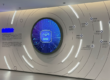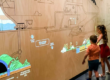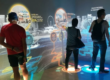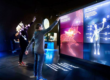

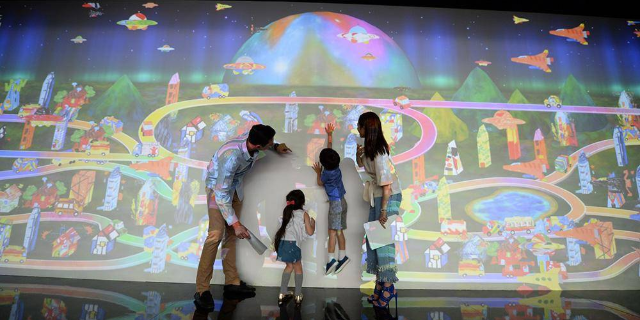
In today’s experience-driven exhibition industry, static displays are no longer sufficient. Modern exhibition halls increasingly demand interactive, immersive, and intelligent engagement. The combination of Human-Screen Interaction + LiDAR Interactive Projection Solutions is redefining how visitors connect with digital content.
By integrating advanced technologies such as LiDAR sensing, touch interaction, voice recognition, AR/VR, and immersive projection, exhibition spaces can transform into dynamic environments that respond in real time to user behavior.
This article provides a comprehensive overview of this integrated solution and its core technologies, optimized for SEO and practical deployment.
What Is a Human-Screen Interaction + LiDAR Interactive Projection Solution?
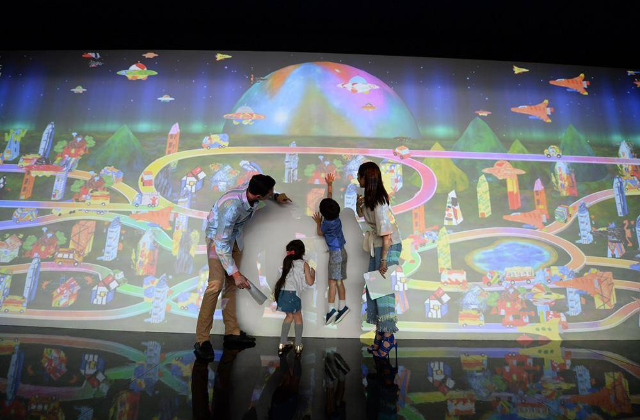
A Human-Screen Interaction + LiDAR Interactive Projection Solution refers to a comprehensive system that enables users to interact with digital displays and projected environments through gesture, touch, voice, and movement.
Unlike traditional display systems, this solution turns screens, walls, floors, and spaces into responsive interfaces, creating a seamless fusion between humans and digital media.
Core Technologies Behind the Solution
1. LiDAR Sensing Technology
LiDAR (Light Detection and Ranging) plays a critical role in enabling high-precision motion tracking and multi-touch interaction.
Applications include:
- Motion-sensing interactive displays
- Virtual receptionist systems
- Interactive sliding screens
- Virtual book flipping systems
How It Works:
LiDAR sensors emit laser signals to map the environment in 3D. By detecting human position and movement, the system allows users to control digital content using body gestures, enabling real-time interaction and even remote content sharing.
2. Touch Interaction Technology
Touch-based systems remain a core component of human-screen interaction.
Common Applications:
- Digital information kiosks
- Gesture recognition interfaces
- LiDAR multi-touch walls
- Multi-screen interactive systems
Key Functions:
- Tap, swipe, zoom, rotate
- Content browsing and querying
- Multi-user simultaneous interaction
This technology enhances usability by offering intuitive and direct control over displayed content.
3. Voice Recognition Systems
Voice interaction enables hands-free control and intelligent communication between users and systems.
Typical Applications:
- Intelligent service robots
- Voice-controlled display systems
- Zoned audio interaction systems
How It Works:
The system captures voice commands, processes them באמצעות AI-based recognition, and triggers corresponding actions on the display.
Key Advantage:
- Seamless interaction: “Sound follows the user, interaction follows presence.”
- Enables dynamic transitions between exhibition zones
4. AR/VR Integration
Augmented Reality (AR) and Virtual Reality (VR) technologies enhance interaction by blending virtual elements with real-world environments.
Features:
- Immersive simulations
- AI-powered interaction
- Facial recognition integration
- Real-time environment augmentation
This creates a futuristic, high-tech exhibition experience that significantly increases visitor engagement.
5. LiDAR Interactive Projection
LiDAR-based projection systems enable interaction across multiple surfaces:
- Floor interactive projection
- Wall interactive projection
- Tabletop interaction
- Window display interaction
User Experience:
When visitors enter the projection area, the system detects their presence and allows interaction through gestures or movement. Visual effects respond dynamically, creating a mixed reality experience.
6. Holographic Projection
Holographic projection combined with human-screen interaction can:
- Demonstrate scientific principles
- Tell stories or historical narratives
- Showcase products in 3D
- Recreate events or environments
This technology adds depth and visual impact, making presentations more compelling.
7. Immersive Projection Systems
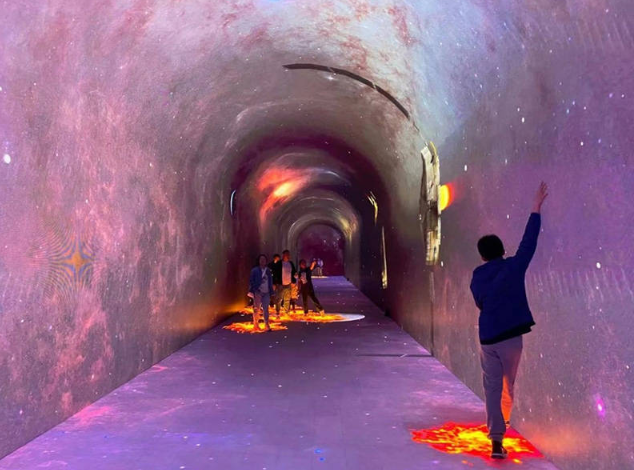
Immersive environments such as time tunnels or panoramic projection rooms provide a fully enclosed sensory experience.
Example:
In a time tunnel installation, visitors walking through the space experience synchronized visuals, audio, and interaction, creating a strong sense of immersion and continuity.
Advantages of LiDAR-Based Interactive Solutions
- High precision and low latency interaction
- Multi-user and multi-touch capability
- Strong anti-interference performance
- Scalable for large exhibition spaces
- Flexible integration with multiple technologies
Compared to traditional infrared systems, LiDAR provides superior accuracy and environmental adaptability.
Applications Across Industries
- Corporate exhibition halls
- Science and technology museums
- Cultural and history museums
- Education and training centers
- Commercial display spaces
These solutions help organizations deliver engaging storytelling, interactive learning, and memorable visitor experiences.
Why Choose CPJROBOT?
CPJROBOT is a professional manufacturer specializing in LiDAR interactive technologies and smart exhibition solutions.
Key Advantages:
- Advanced LiDAR sensing technology
- Customizable interactive software
- Support for multi-projector and large-scale systems
- Stable and reliable performance
- Free testing and development support
CPJROBOT’s solutions are widely used in interactive projection systems, digital exhibitions, and smart display environments worldwide.
Conclusion
As exhibition design continues to evolve toward interactivity and immersion, Human-Screen Interaction combined with LiDAR Interactive Projection is becoming the industry standard.
By integrating sensing, projection, AI, and immersive technologies, this solution transforms passive viewing into active participation—unlocking new possibilities for communication, education, and entertainment.
Looking ahead, with continuous innovation from companies like CPJROBOT, we can expect even more advanced and creative interactive experiences in next-generation exhibition spaces.