
Introduction
As theme parks continue to evolve beyond traditional rides and attractions, operators are increasingly adopting interactive technologies to create memorable guest experiences.
Among these technologies, LiDAR sensors have become one of the most reliable solutions for motion tracking, interactive projection systems, digital attractions, and immersive entertainment environments.
This guide explains how LiDAR sensors work, their advantages over traditional camera-based systems, and why they are becoming the preferred technology for modern theme parks.
What Is a LiDAR Sensor?
LiDAR (Light Detection and Ranging) is a sensing technology that uses laser beams to measure distances and detect the position of people or objects in real time.
Unlike cameras that rely on image processing, LiDAR sensors generate highly accurate spatial data regardless of lighting conditions.
LiDAR sensors are widely used in:
- Autonomous vehicles
- Robotics
- Smart buildings
- Industrial automation
- Interactive entertainment
- Theme parks
- Museums and exhibitions
Why Theme Parks Are Using LiDAR Sensors
Enhanced Visitor Interaction
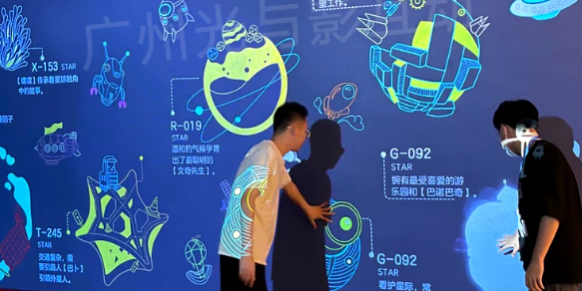
LiDAR enables guests to interact naturally using body movement without touching any equipment.
Visitors can:
- Trigger animations
- Play motion-controlled games
- Activate digital effects
- Interact with virtual characters
- Participate in immersive storytelling
Contactless Experiences
Touchless interaction has become increasingly important in public entertainment venues.
LiDAR technology allows users to interact with attractions through movement and gestures, reducing physical contact with shared surfaces.
Real-Time Motion Tracking
Modern LiDAR sensors can detect movement instantly, creating smooth and responsive interactive experiences.
Applications include:
- Interactive walls
- Interactive floors
- Projection mapping
- Digital sports games
- Interactive exhibits
Reliable Performance in Challenging Environments
Unlike camera-based systems, LiDAR sensors perform consistently under:
- Variable lighting
- Dark environments
- Bright indoor spaces
- High-traffic visitor areas
How LiDAR Sensors Work in Theme Parks
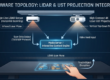
A typical interactive attraction consists of:
LiDAR Sensor
Tracks visitor positions and movements.
Projector or LED Display
Displays interactive content.
Control Software
Processes movement data and triggers actions.
Multimedia Content
Games, animations, visual effects, or educational programs.
The LiDAR sensor continuously scans the environment and sends coordinate data to the software, allowing digital content to react instantly to visitor movements.
LiDAR vs Camera-Based Motion Sensors
| Feature | LiDAR Sensor | Camera Sensor |
|---|---|---|
| Accuracy | High | Medium |
| Lighting Sensitivity | Low | High |
| Privacy Protection | Excellent | Limited |
| Response Speed | Fast | Moderate |
| Environmental Adaptability | Excellent | Variable |
| Commercial Reliability | High | Medium |
For professional interactive installations, LiDAR sensors are generally preferred due to their accuracy and stability.
Popular LiDAR Applications in Theme Parks
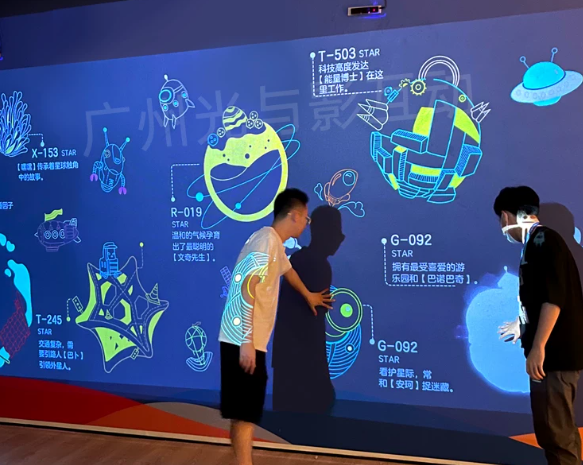
Interactive Projection Walls
Visitors trigger animations, games, and visual effects through movement.
Interactive Projection Floors
Walking, jumping, or running creates real-time visual responses.
Digital Sports Attractions
Football games
Basketball challenges
Target shooting games
Reaction training systems
Interactive Museums
Educational exhibits respond to visitor actions and gestures.
Children’s Entertainment Centers
LiDAR sensors power immersive learning and gaming experiences.
Immersive Art Installations
Visitors become part of dynamic digital artwork through motion interaction.
Key Features to Look for in a LiDAR Sensor
When selecting a LiDAR sensor for a theme park project, consider:
Wide Scanning Angle
Provides larger coverage with fewer sensors.
Multi-User Tracking
Supports simultaneous interaction from multiple visitors.
High Refresh Rate
Ensures smooth and responsive experiences.
Easy Installation
PoE connectivity reduces wiring complexity.
SDK Support
Allows custom software integration and development.
Long-Term Reliability
Suitable for continuous operation in commercial environments.
Why POELIDAR Sensors Are Ideal for Interactive Attractions
POELIDAR sensors are specifically developed for interactive applications.
Advantages include:
- 360° laser scanning
- PoE single-cable installation
- Built-in calibration software
- Multi-touch interaction support
- Real-time motion tracking
- SDK for customization
- Easy deployment and maintenance
These features make POELIDAR sensors an excellent choice for theme parks, museums, retail environments, children’s entertainment centers, and digital exhibition projects.
Frequently Asked Questions
What is a LiDAR sensor used for in theme parks?
LiDAR sensors are used for motion tracking, interactive projection systems, visitor detection, and immersive digital experiences.
Is LiDAR better than camera-based tracking?
For most commercial interactive applications, LiDAR provides greater accuracy, faster response times, and better performance under varying lighting conditions.
Can LiDAR sensors support multiple users?
Yes. Professional LiDAR systems can track multiple users simultaneously.
Are LiDAR sensors suitable for projection mapping?
Yes. LiDAR technology is widely used in projection mapping and interactive projection installations.
Do LiDAR sensors require complex installation?
Modern PoE LiDAR sensors simplify installation by combining power and communication through a single Ethernet cable.
Conclusion
LiDAR sensors are transforming the future of interactive entertainment. By enabling accurate motion tracking, touchless interaction, and immersive digital experiences, LiDAR technology helps theme parks create attractions that engage visitors, increase participation, and enhance overall guest satisfaction.
For operators looking to build next-generation attractions, investing in a professional interactive LiDAR sensor system provides both technological advantages and long-term commercial value.