
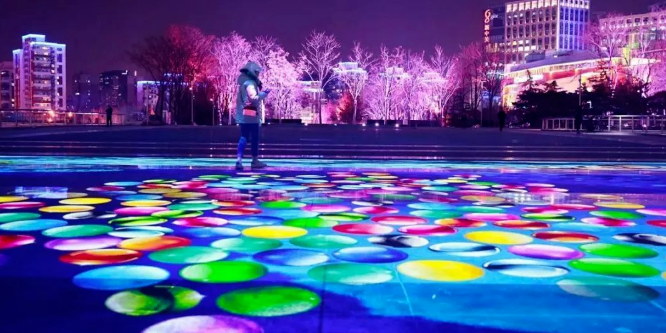
Ground interactive projection systems have become a popular way to engage audiences in exhibitions, museums, retail spaces, and entertainment venues. With prices ranging from $9,000–$45,000, understanding what drives these costs can help businesses make informed decisions.
How Ground Interactive Projection Works
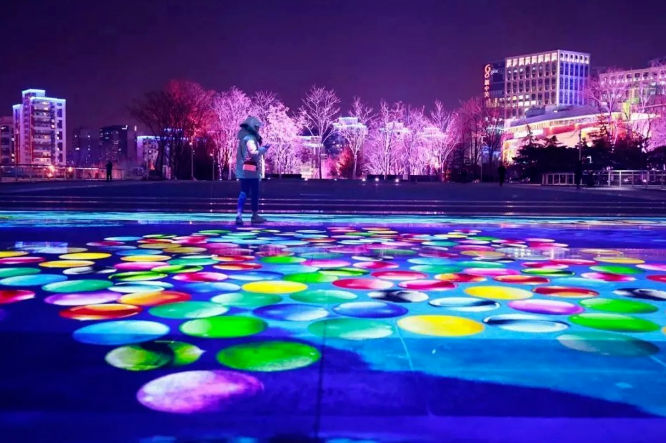
Ground interactive projection captures participants’ movements using motion-sensing devices like PoE LiDAR, infrared cameras, or thermal sensors. The system processes this data in real-time and integrates it with interactive projection software. This allows users to engage directly with virtual environments projected on the floor.
System Components
- Signal Capture – Captures participants’ movements using cameras, infrared sensors, or PoE LiDAR.
- Signal Processing – Converts motion data into actionable input for virtual scenes.
- Imaging – Displays interactive visuals via projectors, LCD screens, LED displays, or other imaging devices.
Core Hardware Breakdown
- Control Host – The central processing unit that manages sensor data and coordinates projection.
- Infrared Cameras / Sensors – Capture user movement and interactions.
- Projectors / LED Screens – Render images and interactive content on the floor.
- Video Capture Cards – Facilitate high-speed data transfer between sensors and the control host.
Why Do Prices Vary: $9,000–$45,000?
Several factors contribute to the wide range in pricing:
- Projection Brightness (Lumens) – High-brightness projectors for well-lit spaces cost more.
- Multi-Projection Fusion Technology – Seamlessly merging multiple projectors increases both complexity and cost.
- Custom Interactive Effects – Highly customized animations, games, and branding elements require more development time and resources.
- Hardware Quality – Premium sensors, control hosts, and imaging devices affect both reliability and price.
Choosing the Right Display Technology
Selecting the proper imaging device depends on the venue’s ambient lighting and space size:
- Projectors – Best for large, flexible areas; ideal for temporary installations.
- LED Screens – Suitable for bright environments; provide vibrant, clear visuals.
- LCD / Plasma Displays – Great for smaller areas with moderate lighting.
Interactive Effects Examples
- Fish Pond Interaction – Footsteps generate ripples; fish react to movement.
- Soccer Game Interaction – Participants control virtual soccer balls with their feet, playing against each other.
- Whack-a-Mole – Stepping on virtual moles scores points; stepping on other objects deducts points.
Advantages of Ground Interactive Projection
- Novel Presentation – Engages audiences and enhances the atmosphere of exhibitions or entrances.
- Innovative Advertising – Interactive ads attract attention and improve retention.
- High Participation – Gamified experiences encourage involvement from all age groups.
- Customizable & Unlimited Content – Update visuals, effects, and projection size without constraints.
- Flexible & Easy Installation – Lightweight systems can be quickly deployed or relocated.
Applications
- Corporate Showrooms & Exhibitions – Highlight products, technologies, or brand narratives.
- Museums & Science Centers – Make exhibits interactive and educational.
- Entertainment Venues – Arcades, theme parks, KTV, and cinemas benefit from immersive play areas.
- Retail & Malls – Attract foot traffic and create shareable experiences.
- Brand Events – Runways, product launches, and public events gain enhanced engagement and impact.
Other suitable venues include wedding venues, office lobbies, public squares, and temporary exhibitions.
Required Equipment
- Projectors
- PoE LiDAR Motion Sensors
- Control Host
- Video Capture Cards
- Infrared Cameras
- Cables & Connectivity Components
FAQ
Q1: What determines the cost of a ground interactive projection system?
A1: Costs depend on projector brightness, multi-projection fusion, custom interactive effects, hardware quality, and system scale.
Q2: Can multiple people interact simultaneously?
A2: Yes. The system supports multiple participants without interference.
Q3: Is the system suitable for both short-term events and permanent installations?
A3: Absolutely. The flexible hardware design allows easy transport, setup, and maintenance.
Q4: How customizable are the interactive effects?
A4: Fully customizable. Effects, animations, and projection areas can be tailored to any venue or event.
Q5: Which display type should I choose for my venue?
A5: Projectors for large areas, LED screens for bright environments, LCD/plasma for smaller indoor spaces.
Enhance your venue with CPJROBOT’s PoE LiDAR-enabled ground interactive projection systems. We provide OEM/ODM customization and partner with global distributors to bring cutting-edge interactive experiences to exhibitions, retail spaces, and entertainment venues worldwide.
Contact CPJROBOT today to explore solutions and join our global distribution network.