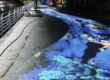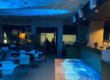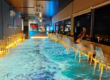

What is floor interactive projection?
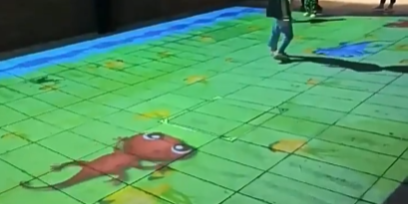
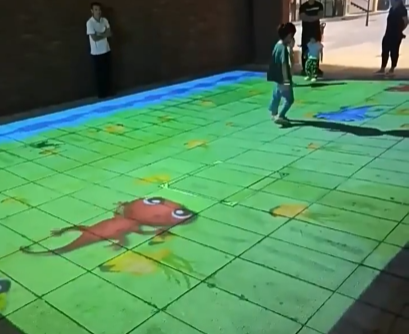
Floor interactive projection places digital content under visitors’ feet and uses sensing software to respond to steps, movement, position, or gestures. Common effects include ripples, particles, trails, virtual objects, competitive games, and information that opens when a visitor enters a zone.
The attraction is immediate: people see the image in their path and discover the response through movement. Yet floor systems also face demanding conditions—shadows, crowd occlusion, footwear variation, cleaning, surface wear, and safety all influence performance.
Why floor projection attracts attention
Floor interaction needs little explanation because the user can test it by stepping forward. Movement is visible to nearby observers, so one participant may attract others. This makes the format useful at entrances, circulation nodes, and family spaces.
Attention alone is not a business outcome. A project brief should connect interaction to a measurable goal such as entering a store, learning an exhibit concept, completing a team activity, or extending time in a venue.
Typical application scenarios
Shopping malls and retail entrances
Campaign graphics, seasonal effects, route cues, and short games can create an active threshold. Keep the experience away from escalator exits, emergency routes, and areas where stopping would obstruct circulation.
Family entertainment centers and children’s areas
Collaborative games can encourage movement and social play. Use age-appropriate pacing, avoid visually overwhelming effects, and design for supervision. The floor finish and the transition between surfaces must be assessed for slip and trip risks.
Museums and visitor attractions
Visitors might follow an animal trail, reveal a historical map, simulate an ecosystem, or trigger location-based media. The interaction should reinforce the exhibit message rather than distract from it.
Schools and activity rooms
Movement can be combined with numeracy, language, coordination, and team exercises. Educators need selectable difficulty, session controls, and a way to reset the activity quickly.
Events and hospitality
Interactive entrances, branded effects, dance-floor visuals, and themed pathways can support temporary events. Fast calibration, transport protection, and a tested setup plan are essential when installation time is limited.
Common floor interaction formats
- Reactive visual effects: footprints, waves, leaves, particles, or cracks respond to movement.
- Collect-and-avoid games: players move toward targets or away from obstacles.
- Sports and coordination activities: timed movement, virtual goals, or team zones.
- Exploration: stepping on a map, symbol, or object reveals information.
- Brand activation: movement triggers product visuals, campaign messages, or a call to action.
Choose a format based on expected dwell time. A five-second entrance effect and a five-minute children’s game require different content, throughput, and supervision.
Key implementation points
Image visibility
Ambient light competes with projected light. Image size, brightness, surface color, content contrast, and overhead mounting all affect visibility. Dark scenes with subtle detail are usually less forgiving in bright public areas.
Detection and occlusion
Crowds can hide one user from another or merge multiple detection regions. Test the intended number of users and their movement patterns, not only a single person walking through a demo.
Safety and accessibility
Projection must not conceal steps, edges, level changes, or warning markings. Avoid effects that could cause disorientation. Preserve accessible routes and check local building, electrical, and fire-safety requirements with the responsible professionals.
Maintenance
Plan for lens cleaning, filter or ventilation checks, floor cleaning, cable protection, calibration verification, and software recovery. Record a baseline test so staff can identify drift or degraded detection.
Frequently asked questions
Does a floor projection system require a special floor?
Not always, but a smooth, stable, light-colored, matte surface usually gives more predictable imagery. The selected finish must also meet the venue’s durability and safety requirements.
Can it work with several children at once?
It can if the sensor coverage, software, computer, and content are designed for multiple participants. Capacity should be validated with representative users before acceptance.
Will people create shadows?
Usually, yes. Projector position, lens choice, multiple-projector layouts, and content composition can reduce the impact, but the solution depends on the site.
Plan a floor interaction with CPJROBOT
Share the active-area dimensions, ceiling height, lighting, floor finish, user age, expected crowd size, and desired game or effect. CPJROBOT can help identify the sensing and testing requirements for your project.