
Why Interactive LiDAR Matters for Vietnam’s Cultural and Tourism Projects
Vietnam’s cultural and tourism industry is evolving quickly. Museums, heritage parks, cultural streets, creative exhibition halls, and night-tour attractions are no longer limited to static displays. Visitors today expect experiences that are immersive, responsive, and memorable. This is where interactive LiDAR technology becomes highly valuable.
From Static Exhibits to Immersive Storytelling
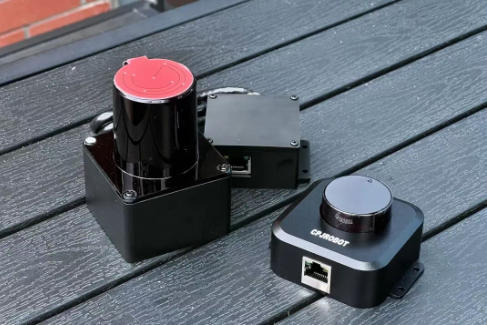
Traditional exhibition spaces mainly rely on printed boards, fixed lighting, and passive audio-visual content. While these methods can communicate information, they often struggle to create emotional engagement. Interactive LiDAR changes this by allowing the environment itself to respond to visitor movement.
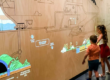
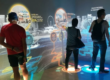
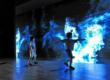
When a person walks across a projected river scene, ripples can appear instantly. When children step into a historical floor projection, animated characters or symbols can light up beneath their feet. Instead of simply viewing content, visitors become part of the story.
Key Use Cases in Museums, Heritage Sites, and Night-Tour Economy
For Vietnam’s tourism and cultural sector, interactive LiDAR is suitable for a wide range of applications:
- Museum floor projection experiences
- Interactive heritage storytelling walls
- Multi-touch digital art installations
- Night-tour projection shows in parks and public spaces
- Family-friendly educational exhibits
- Branded tourism experience centers
These applications help venues attract more attention, increase visitor participation, and improve the overall quality of the experience.
Benefits vs. Traditional Infrared and Camera-Based Interaction
Compared with infrared frames or camera-based motion capture, LiDAR-based interaction offers several practical advantages. It can deliver more precise spatial detection, stronger stability in changing light conditions, and better performance in large-scale floor or wall installations. For crowded public spaces, LiDAR is often more reliable because it is designed for accurate distance measurement rather than simple image interpretation.
For project owners and system integrators, this means smoother interaction, easier calibration, and more consistent long-term operation.
Introducing PoELiDAR-M1: A Dedicated Interactive LiDAR Sensor
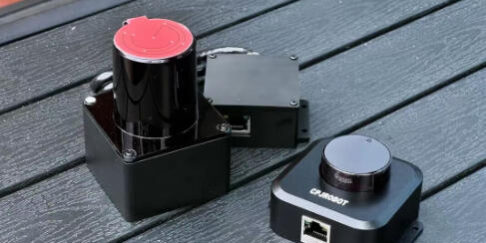
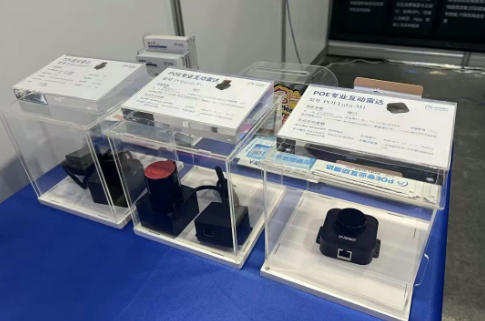
PoELiDAR-M1 is designed specifically for interactive projection and multi-touch environments. It is not a general-purpose sensor adapted for display use, but a dedicated interactive LiDAR solution built for real-time visitor engagement.
High Sampling Rate for Smooth, Real-Time Interaction
In cultural and tourism installations, interaction delay can ruin the visitor experience. If projected visuals respond too slowly, the effect feels disconnected and unnatural. PoELiDAR-M1 supports high-speed sensing and data output, helping interactive systems respond more smoothly to footsteps, gestures, and group movement.
This is especially important for children’s interaction zones, game-based educational spaces, and dynamic projection content where real-time feedback is essential.
Wide Field-of-View for Large Floor and Wall Installations
Many cultural and tourism projects require coverage of wide floor areas or large immersive walls. PoELiDAR-M1 is suitable for these environments because it supports broad detection coverage, making it easier to build large-scale interactive zones with fewer sensing blind spots.
Whether the project is a museum entrance floor, a digital cultural corridor, or a projection wall in a themed exhibition hall, wide coverage improves design flexibility and helps simplify system deployment.
Stable, Long-Term Operation for 12/7 and 24/7 Venues
Tourism venues do not operate like temporary event booths. Many installations run every day for long hours and must remain stable under continuous use. PoELiDAR-M1 is designed for long-term operation in commercial and public environments, making it suitable for venues that require dependable performance throughout the week.
For operators, stable sensing performance means fewer interruptions, lower maintenance pressure, and better visitor satisfaction over time.
Floor Projection Experiences for Cultural and Tourist Spaces
Interactive floor projection has become one of the most attractive formats in modern tourism experience design. It combines movement, light, storytelling, and participation in a highly intuitive way.
Interactive Story Paths on Museum Floors
Museum floors can become part of the exhibition narrative. Instead of walking through a plain corridor, visitors can follow animated cultural paths, historical maps, or symbolic visual trails that respond to every step.
This approach works particularly well in history museums, local culture centers, and themed exhibitions where storytelling is central to the visitor journey.
Gamified Learning for Children and Family Visitors
Family tourism is an important segment in Vietnam’s cultural attractions. Interactive floor projection powered by LiDAR can turn learning into play. Children can explore letters, animals, maps, traditional symbols, or local legends through games triggered by movement.
This not only increases engagement time but also makes educational content easier to remember.
Immersive Night-Tour Installations in Parks and Waterfronts
Night-tour economy projects are growing rapidly. Parks, waterfronts, pedestrian streets, and tourism landmarks increasingly use projection and interactive media to attract evening visitors. LiDAR-based floor interaction can add a new layer of immersion by letting the environment respond to footsteps, crowd movement, or themed event routes.
For example, projected waves, flowers, lantern effects, or cultural patterns can appear and transform in real time, creating a more cinematic and shareable public experience.
Multi-Touch Walls and Hybrid Experiences
Interactive walls are another important application in cultural and tourism spaces, especially where digital storytelling and media art are part of the concept.
Projection Walls for Digital Art and Cultural Narratives
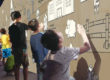
A projection wall can display cultural scenes, historical archives, artistic animation, or tourism branding content. With LiDAR-based touch interaction, visitors can trigger stories, expand details, activate animations, or navigate through multi-layer content directly on the wall.
This helps convert a flat visual presentation into an active exploration experience.
Combining Floor and Wall Interaction in One Scene
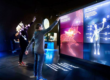
Many modern venues want both floor and wall interaction in the same environment. For example, a visitor may trigger a floor effect while approaching a wall, then continue the experience by touching or gesturing toward projected content. This creates a more complete immersive scene rather than a single isolated effect.
PoELiDAR-M1 can support these hybrid interactive concepts, helping designers create more connected visitor journeys.
Supporting Popular Engines and Protocols (e.g. TUIO, Unity, Unreal)
For system integrators and creative technology teams, compatibility matters. Interactive projects are often built on engines such as Unity or Unreal Engine, and many multi-touch systems rely on communication protocols like TUIO. A dedicated interactive LiDAR sensor should fit smoothly into these technical workflows.
This makes development faster, reduces integration friction, and allows creative teams to focus more on content design.
Why Choose a Local Interactive LiDAR Sensor Supplier in Vietnam
For project owners in Vietnam, working with a supplier that understands local project realities can create significant advantages beyond hardware alone.
Faster Project Delivery and On-Site Technical Support
Interactive tourism projects often face tight timelines, especially before exhibitions, seasonal openings, or public launches. A supplier with local support capability can respond faster, reduce shipping uncertainty, and provide more practical installation guidance when needed.
Customization for Local Venues, Climate, and Power Conditions
Each venue is different. Ceiling height, mounting conditions, visitor flow, humidity, heat, and electrical infrastructure can all affect system performance. A supplier familiar with Vietnam’s project conditions can help tailor sensing and deployment recommendations more effectively.
Lower Total Cost of Ownership Compared to Imported Solutions
Imported solutions may appear attractive at first, but total cost often includes shipping, installation risk, maintenance delay, replacement lead time, and technical communication barriers. Choosing the right interactive LiDAR supplier can help reduce these hidden costs and improve long-term project value.
How We Support System Integrators and Cultural Venue Owners
An interactive sensor is only one part of a successful project. What matters more is whether the supplier can support the full implementation process.
Consulting and Site Survey for Floor Projection Layout
Every project starts with space analysis. We help evaluate floor dimensions, installation height, visitor movement patterns, projection angles, and interaction goals to recommend the right sensing layout.
Hardware Selection, Network Planning, and Mounting Guidelines
PoE deployment can simplify installation and reduce wiring complexity. We support hardware planning, network design, mounting position suggestions, and system structure recommendations to help integrators build more efficient solutions.
Training, Remote Support, and Long-Term Maintenance Options
For long-running cultural and tourism projects, after-sales support matters. We can assist with setup guidance, remote troubleshooting, technical training, and maintenance planning so the system remains stable after launch.
Getting Started with PoELiDAR-M1 in Your Next Cultural or Tourism Project
Interactive LiDAR is no longer just a technology concept. It is becoming a practical tool for museums, tourism destinations, digital art spaces, and immersive public installations.
Typical Project Workflow: From Concept to On-Site Commissioning
A standard project usually follows these steps:
- Concept discussion and use-case definition
- Site survey and layout planning
- Sensor and projection system recommendation
- Integration with software engine or media system
- On-site installation and calibration
- Testing, training, and final launch
A structured workflow helps reduce project risk and improves installation efficiency.
Example Budget Ranges and Recommended Configurations
Project budgets can vary depending on floor size, wall size, interaction complexity, number of sensors, and software requirements. Small installations may focus on a single floor projection zone, while larger cultural attractions may combine multiple floor and wall interaction areas into one integrated experience.
A consultation-based recommendation is usually the most effective way to define the right configuration.
If you are planning an interactive museum, immersive tourism installation, multi-touch projection wall, or digital cultural exhibition in Vietnam, PoELiDAR-M1 can provide a reliable sensing foundation for your project.