
Brazil is becoming an increasingly attractive market for interactive projection, immersive entertainment, and LiDAR-based public experiences. For project owners, system integrators, museums, shopping centers, children’s venues, and tourism operators, the opportunity is no longer limited to simple “floor games.” The market is moving toward networked, multi-user, story-driven interactive spaces.
For suppliers, this shift creates strong demand for stable sensing hardware that can support floor projection, interactive walls, gesture-driven content, and large-area multi-device deployment. That is where a dedicated PoE LiDAR sensor supplier such as CPJROBOT can add practical value for Brazil-focused projects.
Why Brazil Is a Strong Market for Interactive Projection Entertainment
Brazil’s market potential comes from the combination of tourism growth, large urban audiences, active attractions and events ecosystems, and rising demand for more immersive visitor experiences.
Brazil recorded more than 6.621 million international visitors in 2024, the best historical result in the country’s tourism series, and foreign tourists brought in USD 7.3 billion the same year. Momentum continued into 2025, with 4.8 million international visitors in the first five months alone. At the same time, Brazil is highly urbanized according to World Bank data, and it ranked as the fourth-largest domestic flight market worldwide in 2024, which matters because immersive attractions, malls, museums, and entertainment venues depend on dense city populations and strong visitor mobility.
Brazil’s tourism authorities are also openly emphasizing that travel demand is being reshaped by technological advances, changing consumption patterns, and new traveler expectations. Their 2025 tourism trends report notes both the influence of new technology and the concentration of tourists in a relatively small share of destinations, which creates room for venues and destinations to differentiate through memorable interactive experiences. Brazil is also hosting major tourism-sector events in 2025 and 2026, reinforcing the scale of public-facing experience investment.
The broader attractions ecosystem is also relevant. IAAPA, the global association for the attractions industry, maintains a Brazil office as part of its Latin America and Caribbean coverage, while IBGE listed 22,687 events in its 2024 schedule. Together, these indicators point to a market where entertainment centers, exhibitions, tourism spaces, and public activations already matter operationally and commercially.
Why Interactive Projection Fits the Brazilian Market
Interactive projection works especially well in markets where venues compete for foot traffic, dwell time, social sharing, and repeat visits. Brazil checks all four boxes.
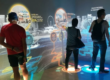
In shopping centers and branded commercial spaces, interactive floors and walls help transform open traffic into active engagement. In children’s entertainment and education, movement-based content makes learning more playful and participatory. In tourism and night-economy projects, interactive projection can turn walkways, plazas, and facades into responsive storytelling surfaces. In museums and cultural spaces, it helps convert static interpretation into immersive participation.
This matters in Brazil because operators are not only competing for attendance. They are competing for experience quality. A passive screen can inform, but a responsive floor or touch wall can make the visitor feel involved.
Popular Application Scenarios for PoE LiDAR Interactive Projection in Brazil
1. Commercial Spaces and Brand Activations
Shopping malls, showrooms, pop-up stores, and event spaces can use interactive projection to create effects such as:
- water ripples triggered by footsteps
- flowers blooming when visitors walk through a space
- coins, icons, or branded particles reacting to movement
- interactive product storytelling zones
These effects do more than entertain. They help brands increase attention, dwell time, and memory retention.
2. Children’s Entertainment and Education
Interactive projection is highly effective in:
- indoor play centers
- edutainment venues
- activity classrooms
- science learning zones
- family entertainment centers
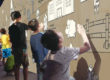
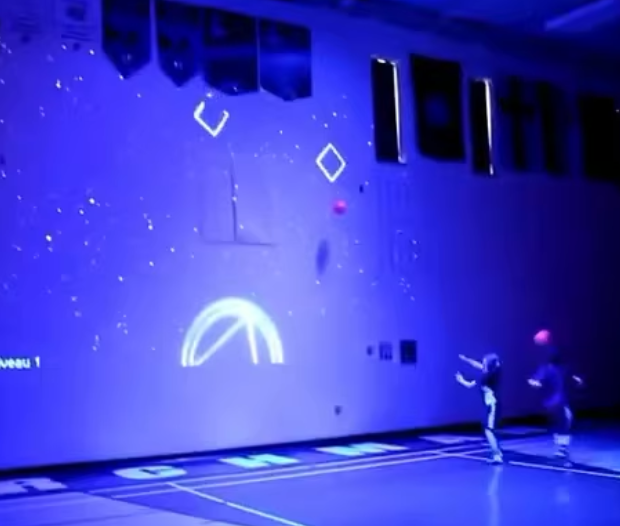
Common content formats include football games, bubble stepping, fish-catching, alphabet interaction, and movement-driven knowledge games. This is especially useful when operators want to combine education + play + throughput in one format.
3. Cultural Tourism, Night Tours, and Immersive Exhibitions
For Brazil’s tourism and public culture sector, interactive projection can support:
- scenic walkways with responsive storytelling
- public squares converted into playable media surfaces
- immersive night-tour routes
- projection-based “checkpoint” games and photo tasks
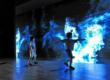
- themed art and light shows with body-driven interaction
This aligns well with the current direction of destination development, where operators increasingly need experiences that are not just watchable, but shareable and participatory.
4. Museums and Art Spaces
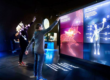
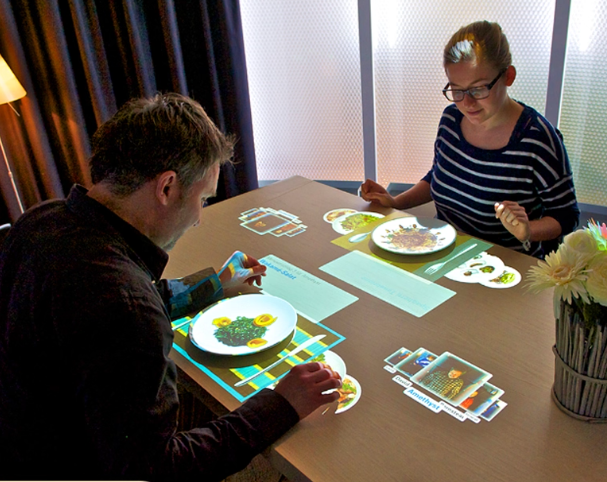
Museums, galleries, and cultural venues can combine LiDAR-driven wall and floor interaction for:
- immersive explanation systems
- participatory art installations
- puzzle-based learning paths
- guided narrative routes
- audience-triggered digital exhibits
Instead of asking visitors to simply read or observe, the space itself becomes part of the exhibit.
How the Mainstream Technical Stack Works: LiDAR + TUIO + Unity
For many interactive projection projects, a practical architecture is:
LiDAR sensor → TUIO data layer → Unity / Unreal content engine
In this workflow, the LiDAR sensor captures motion points or touch-like coordinates from the floor, wall, table, LED surface, or other interactive area. The TUIO protocol then provides a common way to transmit interaction data for multi-touch and object-based surfaces, while engines such as Unity and Unreal Engine are widely used to create real-time interactive visual experiences.
This model is popular because it separates the system into clear layers:
- sensing layer for capturing motion or contact behavior
- protocol/data layer for transmitting standardized coordinates
- content layer for rendering games, effects, and story logic
That separation makes projects easier to scale, maintain, and customize.
Why PoE LiDAR Is a Strong Fit for Interactive Projection Projects
Stable Sensing for Multi-User Environments
A major requirement in entertainment venues is the ability to handle multiple people at the same time. Commercial activations, museum groups, children’s areas, and night-tour installations rarely serve one user at a time. LiDAR-based sensing is valuable because it can support stable spatial detection in crowded spaces without relying only on conventional touch surfaces.
Flexible Interaction Across Many Surface Types
One of the strongest selling points of LiDAR is that it can help make many different surfaces interactive, including:
- floors
- walls
- tables
- LED screens
- large-format stitched displays
- selected irregular or non-standard surfaces
That flexibility gives designers more freedom than fixed-frame interaction alone.
Better Support for Large-Area, Networked Deployment
Many modern projects are no longer one projector plus one sensor. They involve:
- multiple sensors
- multiple projection zones
- network transmission
- heartbeat monitoring
- automatic reconnection
- synchronized operation across larger spaces
For large exhibition halls, brand zones, scenic plazas, and public attractions, this networked structure matters as much as raw sensing performance.
Cleaner Installation with PoE Architecture
For many integrators, PoE LiDAR is especially attractive because Power over Ethernet can reduce wiring complexity and simplify deployment planning. In venues where installation time, cable management, and maintenance access matter, PoE can create a more practical hardware architecture.
Interaction Trends Shaping the Next Stage of the Market
Brazil’s interactive entertainment market is unlikely to stay limited to basic “step and trigger” effects. The next growth stage is moving toward richer interaction models.
Gesture and Body-Driven Content
Projects are evolving from simple foot interaction to:
- hand gestures
- body outline response
- wave-driven animation
- upper-body interaction on walls
- mixed body-and-floor logic
This expands the creative range for museums, media art, and premium brand experiences.
Multiplayer Cooperation and Competition
Family entertainment, school groups, branded events, and tourism installations all benefit from multi-user participation. Operators increasingly want systems that support:
- parent-child collaboration
- team missions
- multiplayer game logic
- competitive scoreboards
- social co-play experiences
This is important commercially because multiplayer content often improves engagement time and replay value.
Story-Driven Immersion Instead of Isolated Mini-Games
A strong trend in the market is the move from “one isolated game effect” to walkable narrative systems. Instead of treating the floor as a novelty, operators are starting to use it as:
- a story path
- a mission route
- a learning journey
- a branded progression mechanic
- a connected scene between floor and wall content
That direction is particularly relevant for tourism, exhibitions, museums, and brand storytelling.
What Brazilian Buyers and Integrators Should Look for in a PoE LiDAR Supplier
When evaluating a PoE LiDAR interactive projection radar supplier for Brazil projects, buyers should look beyond hardware specs alone.
Key considerations include:
- support for multi-touch and multi-user interaction
- compatibility with TUIO and real-time engines
- network stability for large-area deployment
- practical mounting and calibration support
- integration readiness for floor, wall, and hybrid systems
- technical support for commercial and public venues
- long-hour operating stability
For projects in Brazil, support quality matters because installation environments can vary significantly between malls, museums, tourism venues, schools, and outdoor public spaces.
Why CPJROBOT for Brazil Interactive Projection Projects
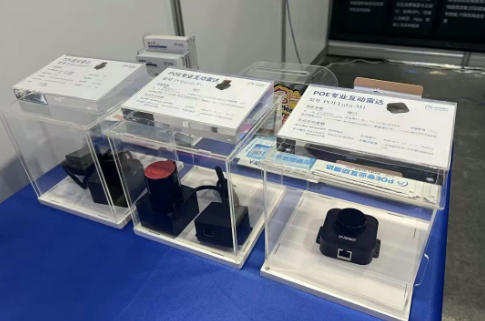
CPJROBOT focuses on PoE LiDAR sensing solutions for interactive projection, touch-responsive walls, and immersive digital environments. For integrators and venue operators targeting the Brazilian market, the value is not only in the sensor itself, but in the ability to support applications such as:
- commercial interactive marketing
- children’s play and edutainment systems
- museum and exhibition interaction
- tourism and night-walk experiences
- large-area networked floor projection
- multi-user touch and gesture projects
A dedicated supplier is especially useful when the goal is to build not just a visual effect, but a complete interactive experience system.
Conclusion
Brazil is a promising market for interactive projection entertainment because it combines growing tourism, high urban concentration, strong visitor mobility, a visible attractions ecosystem, and rising demand for technology-driven experiences. Official data shows record tourism performance and continued momentum, while Brazil’s own tourism trend materials emphasize the growing importance of technology and changing visitor expectations.
For this market, PoE LiDAR is a practical sensing foundation for responsive floors, walls, and immersive public spaces. And as the market shifts toward multi-user, networked, and story-based interactive environments, suppliers that understand both technical integration and experience deployment will be in the strongest position.
If your project targets Brazil’s commercial, cultural, educational, or tourism sectors, a well-designed PoE LiDAR interactive projection system is no longer just a visual upgrade. It is becoming part of the core experience strategy.
FAQ
What is a PoE LiDAR sensor used for in interactive projection?
A PoE LiDAR sensor is commonly used to detect movement or touch-like interaction on floors, walls, tables, and other surfaces in interactive installations.
Why is Brazil a good market for interactive projection entertainment?
Brazil combines strong tourism growth, dense urban audiences, active public events, and increasing demand for immersive, technology-driven visitor experiences.
What is the benefit of using TUIO with LiDAR?
TUIO provides a common protocol for transmitting multi-touch and interaction data, which makes it easier to connect sensing hardware with real-time content applications.
Can PoE LiDAR be used for both floor and wall interaction?
Yes. In many projects, PoE LiDAR can be used for floor projection, touch walls, and hybrid interactive scenes depending on the installation design.
Is PoE useful for large installations?
Yes. PoE can simplify power and network cabling, which helps in large-area deployments with multiple devices.