
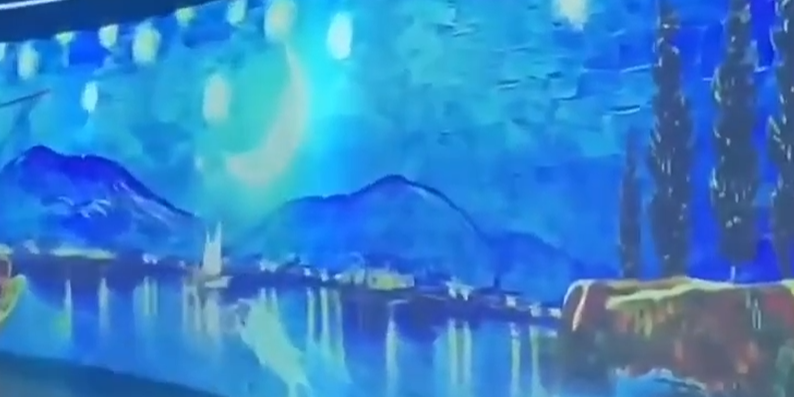
In many interactive projection projects, the biggest challenge is not the software.
It’s the installation environment.
A poorly positioned sensor can cause:
- inaccurate touch detection
- dead zones
- delayed interaction
- unstable tracking
- distorted projection response
At CPJROBOT, we designed the POELIDAR-M1 specifically for real immersive interaction environments —
not laboratory demonstrations.
From interactive floors to wall graffiti systems, the goal is simple:
Fast deployment.
Stable tracking.
Real interactive immersion.
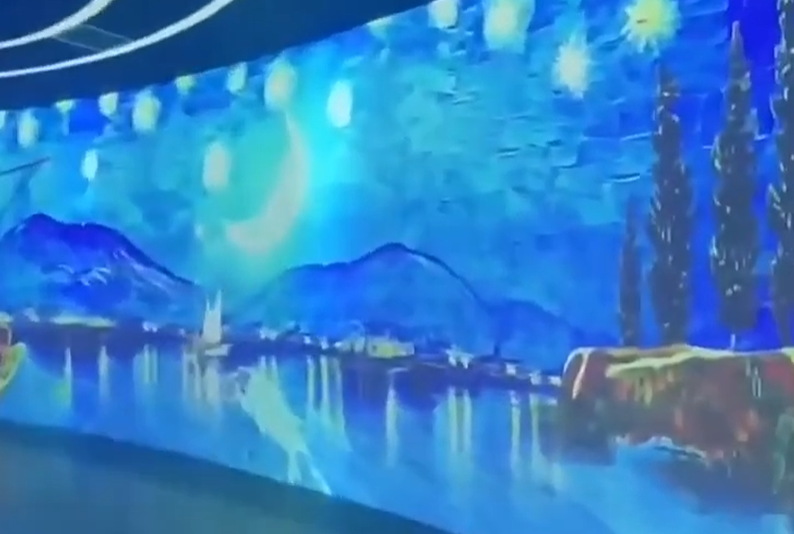
Why Installation Position Matters More Than Many Integrators Expect
In actual projects, we often see the same issue:
The projector resolution is excellent.
The content design looks impressive.
But the interaction feels “off.”
Why?
Because the LiDAR installation angle and environmental positioning were ignored.
In immersive systems:
tracking quality starts from sensor placement.
Not software calibration.
The Real Advantage of 360° Full-Angle Scanning
The CPJROBOT POELIDAR-M1 supports:
- 360° omnidirectional scanning
- over 4-meter practical interaction radius
- PoE single-cable deployment
- fast environmental calibration
This allows one sensor to cover:
- interactive floors
- projection football games
- wall interaction systems
- digital graffiti walls
- immersive exhibition zones
- children’s interactive installations
without requiring complicated multi-camera alignment.
Real Interactive Scenarios
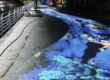
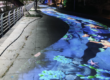
Interactive Floor Football
In projection football systems:
players move rapidly.
The sensor must detect:
- foot position
- movement direction
- multi-user interaction
- edge-area tracking
in real time.
Poor installation height or incorrect environment selection often causes:
- delayed collision detection
- inaccurate ball response
- unstable interaction zones
With proper LiDAR positioning:
the interaction becomes significantly smoother and more natural.
Interactive Graffiti Wall
Wall interaction projects create another challenge:
vertical tracking accuracy.
Especially in:
- museums
- science centers
- children’s interactive spaces
- shopping mall installations
traditional infrared systems often struggle with:
- ambient light interference
- dead-angle problems
- installation complexity
The POELIDAR-M1 simplifies deployment dramatically through:
- wide-area scanning
- flexible installation angles
- fast calibration workflow
- stable tracking response
This is why many integrators now prefer LiDAR-based interaction systems over traditional camera solutions.
Why Environmental Selection Is Critical
During installation, environmental positioning directly affects tracking quality.
Recommended Installation Conditions
✅ Stable mounting surface
✅ Avoid reflective mirrors or glass nearby
✅ Keep scanning area relatively open
✅ Avoid strong direct sunlight in outdoor scenes
✅ Maintain clean sensor visibility
✅ Reserve enough height for full-area scanning
In real projects:
environment optimization often improves interaction quality more than software tuning.
Real Engineering Experience:
“The Sensor Worked — But the Experience Felt Wrong”
During one immersive exhibition project, the client complained:
“The interaction technically works,
but it doesn’t feel responsive.”
The issue was not software.
The LiDAR had been installed too close to a reflective wall.
This caused:
- unstable edge tracking
- random touch drift
- inconsistent movement recognition
After repositioning the sensor:
- tracking stabilized immediately
- interaction latency improved
- user immersion increased dramatically
Sometimes:
small installation details create huge experience differences.
Why PoE Deployment Matters in Creative Projects
Creative studios and exhibition integrators increasingly prefer PoE LiDAR systems because:
- power + data use one cable
- cleaner installation
- faster deployment
- easier maintenance
- lower installation complexity
Especially for:
- temporary exhibitions
- touring installations
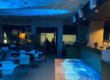
- immersive art spaces
- shopping mall pop-up events
rapid setup capability matters enormously.
Common Search Terms Buyers Use
This topic is often searched as:
- interactive projection LiDAR
- immersive interaction sensor
- wall interactive projection system
- floor projection football interaction
- PoE LiDAR for museums
- interactive graffiti wall solution
- LiDAR for immersive exhibitions
- Unity interactive wall tracking
- TouchDesigner interactive floor system
Which Interactive Scenario Would You Choose?
If you were building an immersive interactive project,
which scene would you deploy first?
⚽ Interactive Projection Football
🎨 Interactive Graffiti Wall
🧒 Children’s Interactive Playground
🏛 Museum Immersive Exhibition
🛍 Shopping Mall Interactive Space
Vote in the comments —
we’d love to see which interaction experience attracts you most.
FAQ
How large is the practical interaction area?
The POELIDAR-M1 supports:
- over 4-meter practical scanning radius
- 360° omnidirectional coverage
Actual performance depends on installation height and environment.
Can one LiDAR support both wall and floor interaction?
Yes.
Different installation angles can support:
- floor interaction
- wall interaction
- hybrid immersive spaces
This flexibility is one major advantage of LiDAR systems.
Why does installation environment affect interaction quality so much?
Because reflective surfaces, sunlight, obstacles, and mounting position all affect tracking stability.
Professional installation planning is critical for immersive projects.
Is PoE deployment easier than traditional systems?
Absolutely.
PoE significantly reduces:
- wiring complexity
- installation time
- troubleshooting difficulty
especially in temporary exhibitions and creative installations.
Final Engineering Advice
In immersive interaction projects:
great interaction is not created by software alone.
It comes from the combination of:
- sensor positioning
- environmental planning
- stable tracking
- clean deployment
- fast response
That’s why professional integrators increasingly choose PoE LiDAR systems for modern immersive environments.
About CPJROBOT
CPJROBOT is a professional PoE LiDAR manufacturer focused on:
- immersive interactive systems
- projection mapping interaction
- interactive wall & floor solutions
- Unity / TouchDesigner interaction
- museum & exhibition installations
- multi-LiDAR deployments
Our products are designed for real-world creative environments —
where stable interaction matters more than theoretical specifications.