
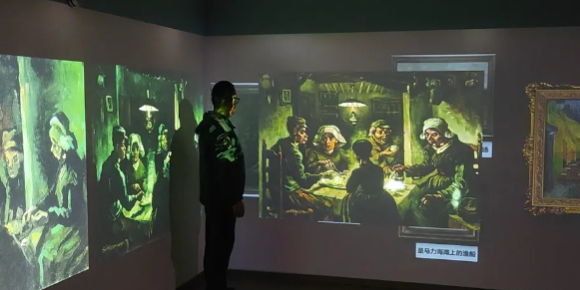
When designing an interactive system—whether for museums, retail spaces, or immersive installations—the choice of sensing technology directly impacts accuracy, stability, and long-term reliability.
The three most common technologies used today are:
- LiDAR (Laser-based sensing)
- Infrared (IR touch frames / IR grids)
- Camera-based tracking systems
From an engineering perspective, these technologies behave very differently under real-world conditions. This guide provides a practical, comparison-driven analysis to help integrators and system designers choose the right solution.
1. How Each Technology Works (Engineering Perspective)
LiDAR (Time-of-Flight Sensing)
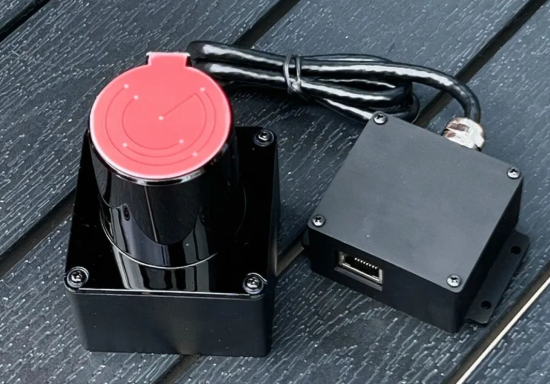
LiDAR systems emit laser pulses and calculate distance based on return time (TOF). This allows precise 3D spatial detection.
Typical use:
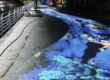
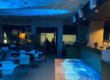
- Interactive walls & floors
- Large-scale immersive environments
- Multi-user tracking
Infrared (IR Touch / IR Frame)
Infrared systems rely on beam interruption. When an object blocks IR light, a touch point is detected.
Typical use:
- Touch frames for screens
- Kiosks
- Small to medium displays
Camera-Based Tracking
Camera systems detect motion or gestures using image processing algorithms.
Typical use:
- Gesture interaction
- Motion tracking
- AR/vision-based installations
2. Accuracy Comparison (Critical for User Experience)
| Technology | Typical Accuracy | Stability |
|---|---|---|
| LiDAR | High (±1–3 cm over large areas) | Very stable |
| Infrared | Medium (depends on frame density) | Moderate |
| Camera | Variable (lighting-dependent) | Low–Medium |
Engineering Insight:
- LiDAR maintains consistent accuracy across large distances (10m+)
- Infrared accuracy decreases with size scaling
- Camera systems suffer from occlusion and algorithm noise
👉 For large interactive environments, LiDAR provides the most predictable performance
3. Latency (Real-Time Interaction Performance)
| Technology | Latency |
|---|---|
| LiDAR | Low |
| Infrared | Very Low |
| Camera | Medium–High |
Key Considerations:
- IR is fastest but limited in scalability
- LiDAR offers low latency with high stability
- Camera systems depend on processing power → latency increases with complexity
4. Resistance to Light Interference
| Technology | Anti-Light Performance |
|---|---|
| LiDAR | Strong |
| Infrared | Weak–Moderate |
| Camera | Weak |
Real-World Observation:
- IR systems fail under sunlight or reflective environments
- Camera systems degrade in low light or high contrast scenes
- LiDAR remains stable due to active laser sensing
👉 This is one of the main reasons LiDAR is replacing IR in commercial projects
5. Installation Complexity
| Technology | Installation Difficulty |
|---|---|
| LiDAR | Low (especially with PoE) |
| Infrared | Medium |
| Camera | High |
Practical Notes:
- LiDAR (especially PoE-based systems) → single cable deployment
- IR → requires frame alignment and wiring
- Camera → requires calibration, angle tuning, and software setup
6. Cost vs Performance (Engineering ROI)
| Technology | Cost | Performance | ROI |
|---|---|---|---|
| LiDAR | Medium–High | High | Best for large systems |
| Infrared | Low–Medium | Medium | Best for small screens |
| Camera | Medium | Variable | Risky in complex environments |
Key Insight:
- IR is cost-effective but limited in scalability
- Camera systems often appear cheaper initially but increase engineering cost
- LiDAR offers best long-term ROI in commercial deployments
7. When to Choose Each Technology
Choose LiDAR if:
- You need large-area interaction (wall/floor/immersive space)
- Multi-user interaction is required
- Environment includes strong light or reflective surfaces
- You want stable performance with minimal recalibration
Choose Infrared if:
- You are working with fixed-size screens
- Budget is limited
- Environment is controlled
Choose Camera if:
- You need gesture recognition (not precise touch)
- Interaction is non-contact / motion-based
- Lighting conditions can be controlled
8. Why LiDAR Is Becoming the Industry Standard
From an engineering deployment perspective, LiDAR solves three major issues:
- Scalability → works from small areas to large immersive spaces
- Stability → unaffected by lighting and environment
- Accuracy → consistent across distance
This is why manufacturers like CPJROBOT are focusing on PoE LiDAR-based interactive systems, enabling:
- Faster installation
- Lower maintenance
- Higher project reliability
9. FAQ (Frequently Asked Questions)
Q1: Is LiDAR more expensive than infrared?
Yes, initial cost is higher, but total project cost is often lower due to reduced installation and maintenance.
Q2: Can LiDAR work in bright environments?
Yes. LiDAR is highly resistant to light interference, making it suitable for commercial spaces.
Q3: Why do camera systems feel unstable?
Because they rely on image processing, which is affected by:
- Lighting
- Shadows
- Occlusion
Q4: Is infrared still relevant?
Yes, but mainly for small-scale, fixed applications such as touch kiosks.
Q5: Can LiDAR support multi-user interaction?
Yes. LiDAR systems are designed for multi-point and multi-user detection, especially in large interactive environments.
If your project requires precision, scalability, and reliability, LiDAR is currently the most robust solution among the three.
Infrared remains useful for simple, cost-sensitive applications, while camera-based systems are better suited for gesture-driven experiences rather than accurate touch interaction.
If you’re evaluating interactive technologies for your next project and need a stable, scalable LiDAR solution, it’s worth working with a specialized manufacturer.
CPJROBOT provides PoE LiDAR systems designed for real-world deployment, supporting large-scale interactive environments with engineering-level reliability.
👉 If needed, I can help you:
- Design a LiDAR system architecture
- Optimize installation layout
- Recommend the right hardware configuration for your project