
In today’s urban landscapes, public art is no longer just something to observe—it’s something to experience, influence, and co-create. At the intersection of digital storytelling, visual design, and cutting-edge sensing technology lies “The Now”, a groundbreaking interactive wall installation that redefines how people engage with art in shared spaces.
This large-scale public artwork not only blurs the line between observer and participant but also serves as a compelling case study for the future of LiDAR-powered interactive public art.
What Is “The Now”?
“The Now” is a dynamic, ever-evolving interactive public art project conceived by artists Laia Cabrera and Isabelle Duverger, in collaboration with creative technologists from NoirFlux and Karan Parikh. Blending elements of:
- Cinematic video
- Projection mapping
- Hand-drawn animation
- Real-time generative visuals
…the team created what they call an “interactive plaza”—a living canvas shaped entirely by human presence and movement.
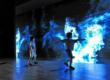
Unlike traditional installations with fixed narratives, “The Now” has no script. Instead, it responds in real time to the gestures, motions, and pauses of passersby, transforming each fleeting interaction into a unique, unrepeatable moment—hence its name.
A Magical Window in Times Square
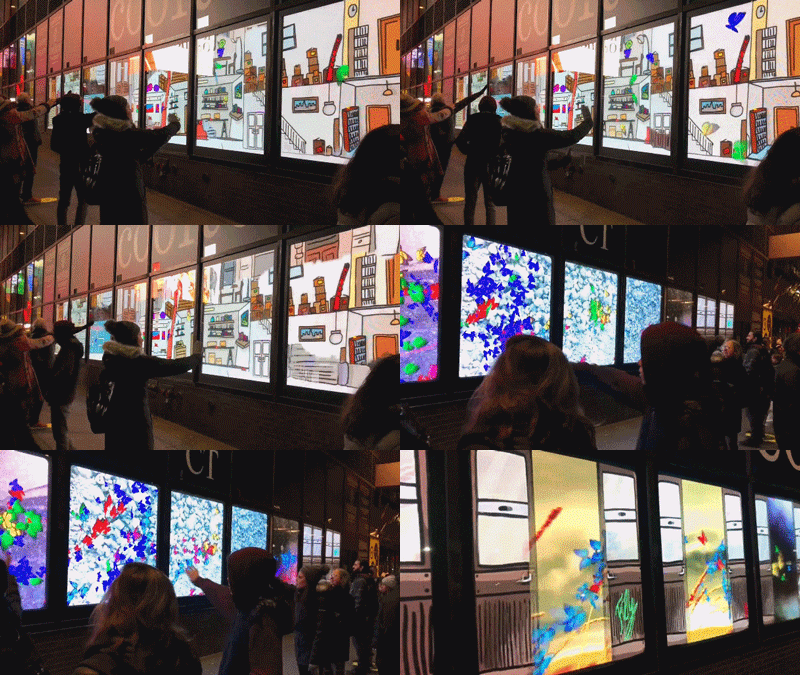
Located on the street-facing windows of the Port Authority Bus Terminal in New York City’s Times Square, “The Now” turns ordinary glass panes into responsive digital surfaces.
As visitors walk by:
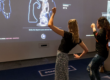
- Their gestures are captured
- Their silhouettes are detected
- Their movements trigger visual responses
The result? A seamless fusion of physical reality and digital imagination—where the city itself seems to see and respond to you.
Scale & Impact: 72 Feet of Living Art
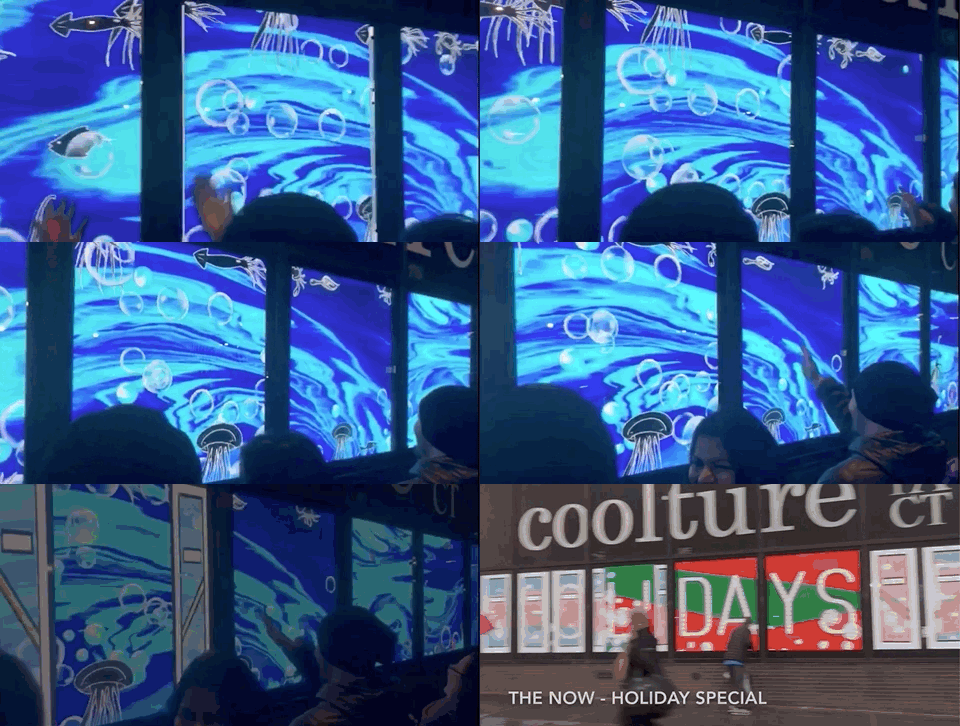
Spanning 72 feet (22 meters), this interactive wall engages over 200,000 people daily—with zero learning curve. Key features include:
✅ Multi-user interaction: Dozens can participate simultaneously without interference
✅ Intuitive design: No buttons, apps, or instructions needed
✅ Generative storytelling: Every motion spawns new characters, scenes, or animations
Each visitor becomes a co-author of the artwork, contributing to a collective, ever-changing narrative that exists only in the present moment.
The Secret Behind the Magic: LiDAR Sensing Technology
What makes such a large-scale, real-time interactive experience possible? LiDAR (Light Detection and Ranging).
Unlike camera-based systems, LiDAR offers critical advantages for high-traffic public environments:
🔹 Non-contact interaction: No touching required—ideal for hygiene and durability
🔹 Robust in complex lighting: Works flawlessly under bright sunlight, glare, or reflections
🔹 Wide-area coverage: Accurately tracks movement across 10+ meters continuously
🔹 Multi-person tracking: Simultaneously senses dozens of users from multiple angles
🔹 Privacy-friendly: Captures spatial data, not identifiable images
This precision and reliability make LiDAR the ideal backbone for next-generation interactive facades, smart windows, and urban media walls.
Powering the Future: CPJROBOT’s LiDAR Solutions for Public Art
Companies like CPJROBOT are at the forefront of enabling these immersive experiences. As a leading provider of interactive LiDAR hardware and integration systems, CPJROBOT delivers tailored solutions for projects like “The Now”, including:
- Long-range, continuous spatial scanning
- Real-time multi-directional user tracking
- Seamless integration with LED walls, projectors, and generative media engines
- PoE (Power over Ethernet) support—simplifying installation in historic or constrained urban sites
By converting human behavior into real-time data streams, CPJROBOT’s systems empower artists to focus on narrative and emotion, while the technology handles perception invisibly and reliably.
The Future of Public Art Is Interactive—and Alive
“The Now” isn’t just an installation—it’s a blueprint for the future of urban experience. It reveals four key trends shaping tomorrow’s public spaces:
- Audience as Co-Creator: Art emerges from collective human behavior
- Architecture as Interface: Windows, walls, and walkways become responsive surfaces
- Invisible Technology: Sensors fade into the background; experience takes center stage
- Ephemeral Beauty: No two moments are alike—art lives only in the now
As cities grow smarter and more connected, LiDAR-enabled interactivity will become essential infrastructure—not just for art, but for inclusive, engaging, and emotionally resonant public life.
Conclusion: When Cities Become Living Artworks
Projects like “The Now” prove that urban spaces don’t have to be passive backdrops. With the right blend of creativity and technology—especially LiDAR sensing—they can become responsive, empathetic, and participatory.
When public art listens…
When glass remembers your wave…
When the city dances with you…
…then the boundary between environment and experience dissolves.
And thanks to innovators like CPJROBOT, this vision is no longer science fiction—it’s already unfolding on streets around the world.
- What Is LiDAR Interactive Projection? A Complete Guide to Its Applications in Modern Exhibition Halls
- What Is LiDAR Interactive Projection? A Complete Guide to Its Applications in Modern Exhibition Halls
- Advantages of Interactive Projection in Multimedia Digital Exhibition Halls
- Three Common Types of Interactive Wall Projection in Modern Exhibition Halls
- The Future of Dining — Inside the Interactive Projection Restaurant Revolution