
As interactive installations scale from small touchscreens to large immersive environments, traditional sensing technologies (like infrared or camera-based tracking) often struggle with accuracy, stability, and environmental interference.
This is where TOF (Time-of-Flight) LiDAR becomes critical.
In this article, we break down:
- What TOF LiDAR is
- How it calculates distance
- Why it is more stable than infrared systems
- How it is used in real-world interactive applications
This guide is written from an engineering and system integration perspective, focusing on how the technology performs in deployment—not marketing claims.
1. What Is TOF LiDAR?
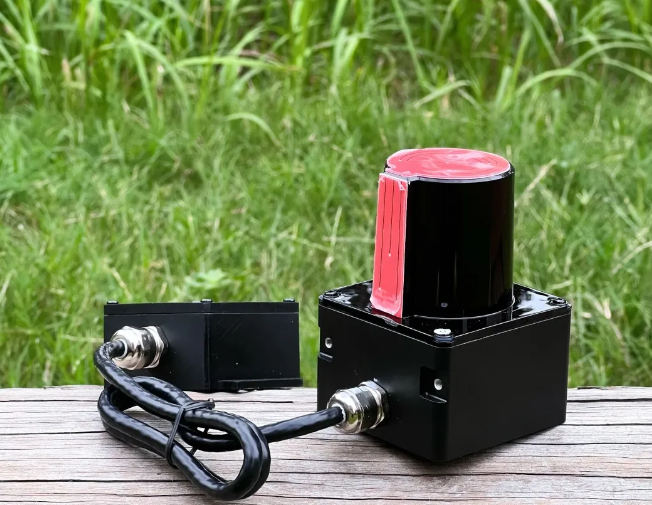
TOF LiDAR (Time-of-Flight Light Detection and Ranging) is a sensing technology that measures distance by calculating the time it takes for a laser pulse to travel to an object and return.
Core Concept:
- Emit laser pulse
- Hit object
- Reflect back to sensor
- Measure time difference
Because light travels at a constant speed, distance can be calculated precisely.
2. Distance Calculation Principle (How TOF Works)
The fundamental equation behind TOF LiDAR is:
Distance = (Speed of Light × Time of Flight) / 2
Why divide by 2?
Because the signal travels to the object and back.
Practical Example:
- Laser pulse emitted
- Returns in a few nanoseconds
- System calculates distance in real time
Engineering Insight:
- Modern TOF systems operate at high frequency (thousands of measurements per second)
- This enables real-time tracking of multiple touch points
3. How TOF LiDAR Works in Interactive Systems
In interactive environments, TOF LiDAR is not just measuring distance—it is building a dynamic spatial map.
Workflow in Interaction Systems:
- Continuous Laser Scanning
- The LiDAR scans across a defined field (e.g., 270°)
- Point Cloud Generation
- Each detected object becomes a coordinate point
- Touch Detection Logic
- When an object (hand/foot) enters a defined plane → system interprets it as a touch
- Data Output
- Converted into interaction protocols:
- TUIO
- Windows Touch
- Converted into interaction protocols:
- Trigger Interaction
- Software (Unity / C++ / C#) responds in real time
4. Why TOF LiDAR Is More Stable Than Infrared
4.1 Active vs Passive Detection
| Technology | Detection Method |
|---|---|
| TOF LiDAR | Active laser measurement |
| Infrared | Beam interruption |
| Camera | Image processing |
Key Difference:
- LiDAR actively measures distance
- IR and camera rely on external conditions
4.2 Resistance to Environmental Interference
Infrared Limitations:
- Sunlight interference
- Reflective surfaces
- Beam misalignment
Camera Limitations:
- Lighting dependency
- Shadows and occlusion
- Processing delays
TOF LiDAR Advantages:
- Independent of ambient light
- Works in bright or dark environments
- Less affected by reflections
👉 This makes TOF LiDAR significantly more reliable in commercial and public installations
4.3 Accuracy Over Distance
- Infrared → accuracy decreases with size
- Camera → inconsistent across depth
- LiDAR → maintains centimeter-level accuracy across large areas
5. Advantages of TOF LiDAR in Interactive Applications
5.1 High Precision Interaction
- Wall interaction: ≤2–3 cm accuracy
- Suitable for large-scale installations (10m+)
5.2 Multi-User Capability
- Detects multiple points simultaneously
- Supports group interaction scenarios
5.3 Large Coverage Area
- Wide scanning angles (e.g., 270°)
- Suitable for:
- Floors
- Walls
- Immersive rooms
5.4 Low Latency
- Real-time response
- Suitable for dynamic content (games, simulations)
5.5 Simplified Installation (PoE Systems)
- Single cable (power + data)
- Reduced wiring complexity
- Faster deployment
6. Real-World Use Cases of TOF LiDAR
TOF LiDAR is widely used in:
Commercial Spaces
- Interactive floors in shopping malls
- Retail engagement installations
Museums & Exhibitions
- Digital walls
- Educational interactive systems
Immersive Environments
- Multi-wall projection rooms
- AR/VR hybrid installations
Public Installations
- Smart city displays
- Interactive advertising
7. Engineering Considerations When Using TOF LiDAR
From deployment experience, performance depends on:
Installation Position
- Must cover full interaction area
- Avoid blind zones
Surface Conditions
- Avoid highly reflective materials
Calibration
- Accurate multi-point calibration is critical
Network Stability
- Especially for multi-device setups
8. Why Manufacturers Are Moving Toward TOF LiDAR
From a system design perspective, TOF LiDAR provides:
- Higher reliability in uncontrolled environments
- Scalable deployment (small → large spaces)
- Reduced maintenance cost
This is why companies like CPJROBOT are focusing on PoE-based TOF LiDAR systems for interactive applications.
9. FAQ (Frequently Asked Questions)
Q1: What does TOF mean in LiDAR?
TOF stands for Time-of-Flight, referring to how distance is measured using light travel time.
Q2: Is TOF LiDAR accurate enough for touch interaction?
Yes. Modern systems achieve centimeter-level accuracy, suitable for interactive walls and floors.
Q3: Can TOF LiDAR work in bright environments?
Yes. Unlike infrared, TOF LiDAR is resistant to sunlight and strong lighting conditions.
Q4: Is TOF LiDAR better than infrared?
For large and complex environments—yes. It provides:
- Better stability
- Higher accuracy
- Less interference
Q5: Does TOF LiDAR require complex installation?
No. Especially with PoE systems, installation is simplified to a single cable setup.
TOF LiDAR is not just an alternative to infrared or camera systems—it represents a fundamental shift in how interactive environments are built.
Instead of relying on environmental conditions, it delivers:
- Predictable performance
- Scalable architecture
- Consistent user experience
If you are planning an interactive system and need a reliable sensing solution, understanding TOF LiDAR is the first step.
CPJROBOT specializes in TOF LiDAR-based interactive systems, designed for real-world deployment across commercial and immersive environments.
If needed, I can help you:
- Evaluate whether TOF LiDAR fits your project
- Design a complete interactive system architecture
- Recommend optimized installation and hardware setup